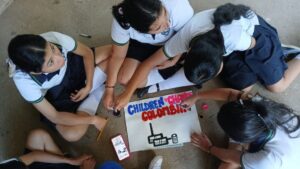
“Las niñas existimos” fue el nombre de la manifestación artística que un grupo de niñas hizo frente al ICBF, en medio de una polémica que parece de gramática: ¿Hay que21 January 2022
Read MoreAs one of the most biodiverse areas on the planet, Chocó, Colombia’s westernmost department, is widely regarded as a luscious tropical rainforest full of life. However, behind this paradisical façade lies the clandestine domination of armed groups, who incite terror on local indigenous communities and exploit the land for its resources. The main attraction for armed groups operating in the area is the widespread presence of one key mineral – gold. Despite 90% of these mines being illegal, these gangs run well established operations extracting this resource, using child labour as the predominant work force. Not only this, but armed groups carry huge influence and control in the narcotics industry, where they recruit children to farm large cultivations of coca plants.
“Me and my friends dream of getting a better education. It’s beautiful where I live but there are lots of things we don’t have – healthcare, good housing, education – and the armed conflict is causing us more and more problems. I want to learn how to overcome the problems we face in our region and to make the most of the resources our land has to offer. For this we need better schools, otherwise children like me will keep joining armed groups or move away to the city – we’ll make our families sad and our local culture and traditions will be lost forever.”
According to the Coalition Against the Involvement of Children and Young People in the Armed Conflict in Colombia, between January and the 13th May 2020, forced recruitment of minors increased by more than 100% to 123 cases, in comparison to the 67 that were recorded in 2019, making Chocó one of the worst affected regions in all of Colombia.

As well as the obvious ramifications for children’s safety and human rights, the presence of armed groups has also had a detrimental effect on both the environment and children’s education. Limitations in the current education system mean that drop out rates are high, with children frequently leaving for the purpose of joining armed groups. Indeed, many schools in the region are facing closure due to dwindling student attendance. Students simply do not feel education is a viable option for improving their material circumstances and thus it is often viewed as unimportant.
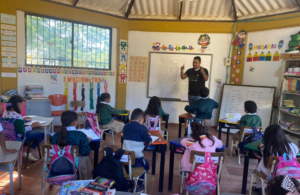
Our partner organisation, Acadesan, has been working for more than 20 years in the area, combating the issues that are preventing children from accessing high quality education, helping them stay in school and reach their full potential. Our current project with Acadesan works with schools in Chocó providing them with their own pedagogical model which combines ethno-education specific to Afro-Colombian culture with conventional teaching methods. These new strategies are designed to encourage children to stay in school and educate them on their ethnographic heritage.

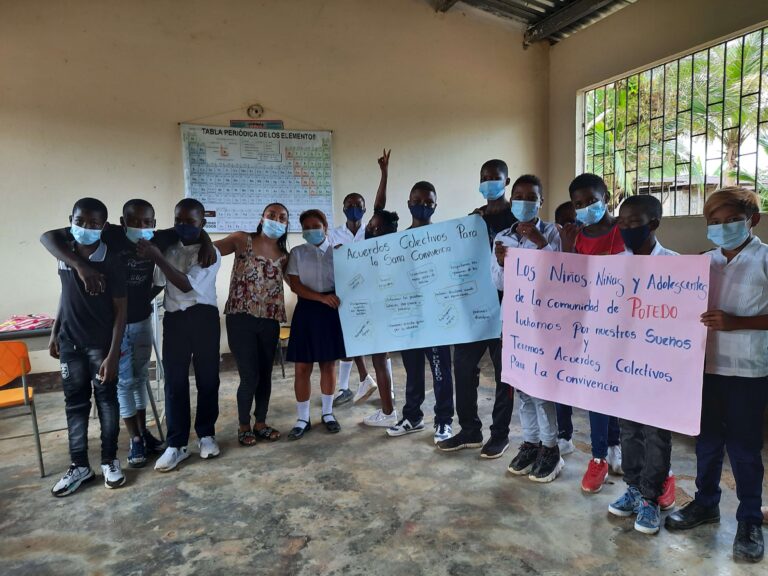
The project provides engaging extracurricular educational workshops with teachers and students every month which focus on developing socio-emotional skills amongst children to prevent school dropouts and forced recruitment by illegal armed groups. CCC and Acadesan recognise conflict resolution, emotional management and acceptance of diverse opinions are vital skills for children to protect themselves and their communities in challenging situations.
“Las niñas existimos” fue el nombre de la manifestación artística que un grupo de niñas hizo frente al ICBF, en medio de una polémica que parece de gramática: ¿Hay que21 January 2022
Read MoreDebido a las consecuencias del terremoto, los cortes de energía generalizados y las fallas de conectividad retrasaron la evaluación de los daños. La mayoría de las comunidades de la región21 January 2022
Read MoreDue to the earthquake's aftermath, widespread power outages and connectivity failures slowed the damage assessment. Most communities in the region remain without electricity, the majority reported partial or total loss21 January 2022
Read MoreLos resultados plantean claramente inquietudes sobre la eficacia con la que los sistemas educativos preparan a los jóvenes. Al mismo tiempo, al analizar más allá de los promedios generales, se21 January 2022
Read MoreThe PISA results clearly raise concerns about how well education systems are preparing young people. At the same time, looking beyond the overall averages shows that educational performance is not21 January 2022
Read More