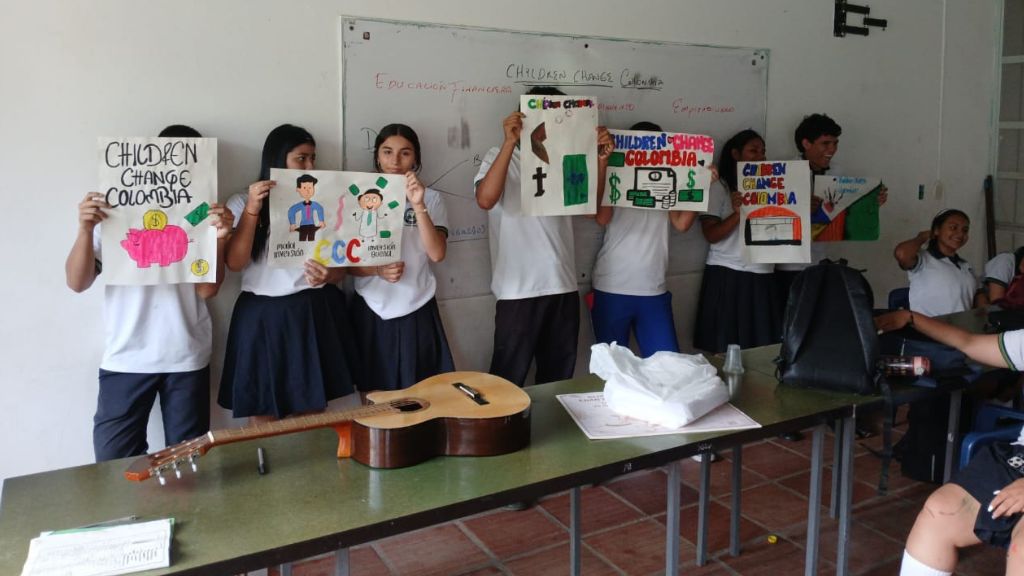
Along the winding roads of Santander’s Cacao Route, something meaningful is taking shape. It is not driven by polished narratives or constructed imagery, but by real voices, lived experiences, and visible change which centers the educational needs of Santander’s youth.
In a region where access to education and employment has often been limited, young people are beginning to rethink what their futures can look like. Through the Young Livelihoods and Bilingualism in Santander project, students are not only learning English or developing business ideas. They are building confidence, discovering purpose, and finding new ways to participate in and improve their communities.
This is a story of transformation grounded in reality and shaped by the testimonies of students, teachers, and families who are part of it every day.
A project rooted in the cacao route
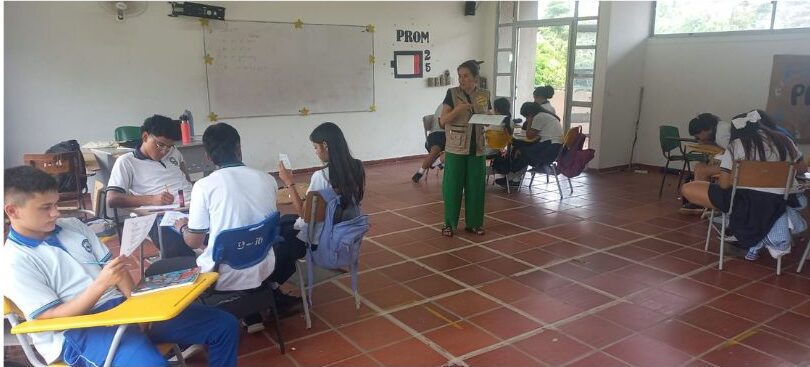
Our project takes place in educational institutions along Santander’s Ruta del Cacao (known as Cacao Route in English), including schools such as La Estación, Marta, and Colpaz. These communities in the Cacao Route are largely rural, and many young people face structural barriers when it comes to continuing their education or accessing stable employment.
From the beginning, the project set out to respond to this context in a practical way. Due to the structural barriers to education, the project focused on adolescents between the ages of 12 and 18 by offering them tools that can support their future livelihoods. These tools have included English language learning, financial education, entrepreneurship training, and employability skills.
What started in three schools has steadily grown both in reach and in depth. This growth reflects not only strong implementation but also the enthusiasm and commitment of the students to improve themselves to obtain a meaningful profession grounded in positive values in the long run.
Learning that connects to real life
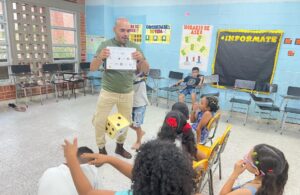
One of the most noticeable outcomes of the project has been the way students relate to what they are learning. English sessions, for example, have gone beyond basic instruction. They have created spaces where students feel comfortable participating, experimenting, and expressing themselves. By 2025, 356 students attended English sessions regularly, and teachers participating in the program have observed clear progress in both language skills and confidence. However, some limitations remain, although attendance is strong in general , has not been fully consistent across all students and varying levels of prior knowledge have meant that progress is uneven. Overall, even with these limitations, the students who were initially hesitant became more willing to speak, engage, and even present ideas in English over the program’s duration.
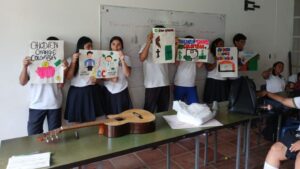
Moments like the English Singing Day at Marta school captured this shift. At Marta School, students performed before their peers which showcased both the knowledge they acquired throughout the program and the confidence they developed through consistent practice and discipline. The teachers themselves described these changes as a complete transformation in how students see themselves as learners.
From ideas to opportunities
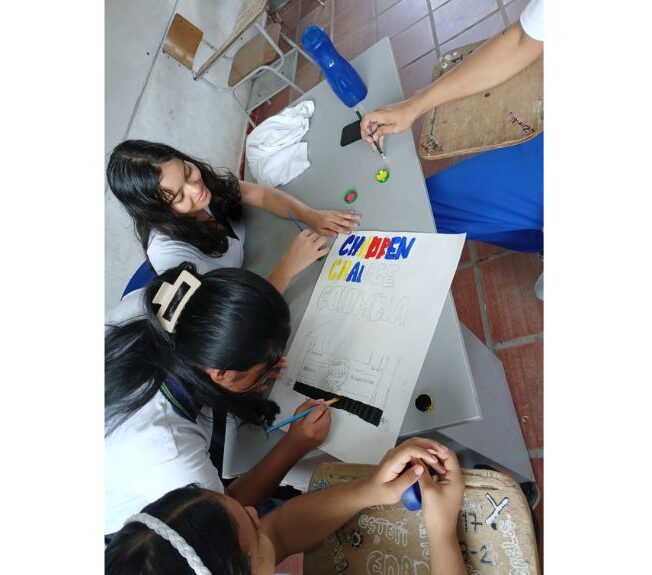
The Santander project also places strong emphasis on entrepreneurship and employability. Older students, particularly those in upper grades, have participated in workshops that explore financial literacy, business development, and job readiness. Through this process, students have developed practical skills and begun to think differently about their futures. The first year, 256 students took part in financial education activities, and 110 students completed entrepreneurship and employability training. From these groups, 12 business ideas were identified as viable and are now moving forward with the possibility of receiving seed capital and continued support.
These initiatives are closely tied to local realities. Many focus on agriculture, food production, and sustainable practices, often involving family participation. The families who participated in the project have expressed pride in seeing young people apply what they learn in ways that contribute to household and community life.
Extending Beyond the Classroom
A key strength of the project is how it connects learning with real-world experiences. This was especially evident during the Entrepreneurship and Employability Fair held in October 2025.
The fair brought together students, local entrepreneurs, and institutions which created a space for interaction and exchange. Students presented their ideas, engaged with potential supporters, and experienced what it means to take an idea into a public setting. “The presence of organisations such as SENA (Servicio Nacional de Aprendizaje, or National Learning Service in English), Cajasan (Caja de Compensacion Familiar en Santander, or the or Family Compensation Fund of Santander in English), and the Chamber of Commerce of Bucaramanga added further value by offering guidance on education, employment pathways, and business formalisation.
Experiences like this help students see that their ideas have relevance beyond the classroom. They begin to understand themselves as active participants in their local economy and community.
Growth and expansion
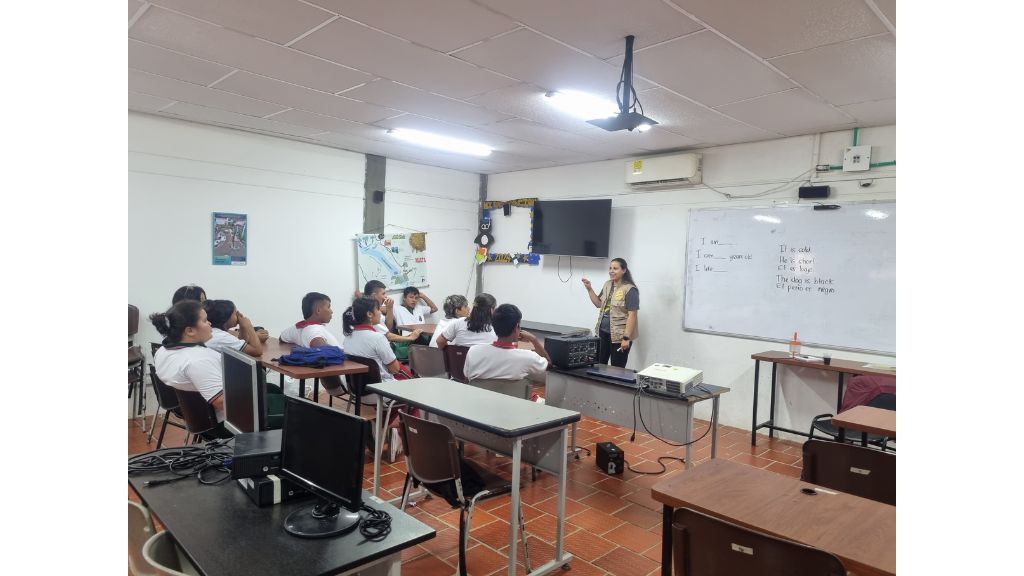
The first year of the project provided important insights, and these have shaped its expansion. In 2026, the initiative is reaching a larger number of students, with the potential to impact up to 644 participants across additional schools in the villages of Marta, Colpaz and Portugal.
The programme has also been strengthened in its design as schools now have more time allocated for sessions, which allows for deeper engagement. Alongside English, entrepreneurship, and financial education, a new psychosocial component has been introduced. This addition focuses on wellbeing, resilience, and life planning, recognising that personal development is closely linked to educational and professional outcomes.
Crucial to the expansion of the Santander project has been our regional partners, who ensure the sustained delivery of these sessions. Notably, our collaboration with Cajasan has enabled further opportunities for vocational training and employability support, particularly for students transitioning out of school.
A holistic approach to learning
What makes the project distinctive is the way it combines different areas of learning into a cohesive experience. Students are not only developing technical skills but also exploring who they are and what they want for their future.
Younger students engage with financial literacy through practical activities that relate to their daily lives. Older students apply English in contexts linked to entrepreneurship and employment, using the language as a tool rather than an abstract subject. At the same time, psychosocial sessions support self-awareness, communication, and resilience.
This integrated approach allows students to connect different aspects of their learning and see how they fit together in real life.
Real voices, real impact
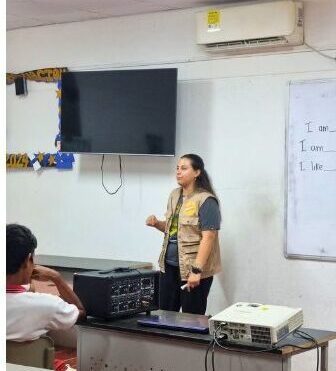
At its core, this project is about participation. Students are not simply receiving information. They are actively involved in shaping their learning and applying it in meaningful ways.
Teachers have observed significant changes in motivation and engagement. Families have become more involved, particularly when students begin to develop business ideas that connect to local activities. Young people themselves are expressing greater confidence in their abilities and clearer aspirations for their futures.
These outcomes are not abstract. They are visible in classrooms, in community events, and in the everyday interactions that define the project.
Conclusion
The experience along the Cacao Route shows what can happen when education is relevant, participatory, and grounded in real contexts.
By combining language learning, entrepreneurship, and personal development, the project creates pathways that extend beyond school. It supports young people in imagining different futures and gives them tools to begin building those futures in practical ways.
Most importantly, it does this by centering real voices and real experiences. The impact comes not from constructed narratives, but from the lived realities of the students and communities involved.
Along the Cacao Route, the realities for many of the region are changing, and our program demonstrates what is possible when you give the next generation the tools to build their own futures. The project in Santander should be understood as part of an ongoing process where education is key, and where we are supporting and progressing together while recognising that there are still challenges we must overcome.
Written by: Diego Mojica | CCC Programmes and Communications Intern and Patricia Montenegro | Members of the Project Staff in Santander