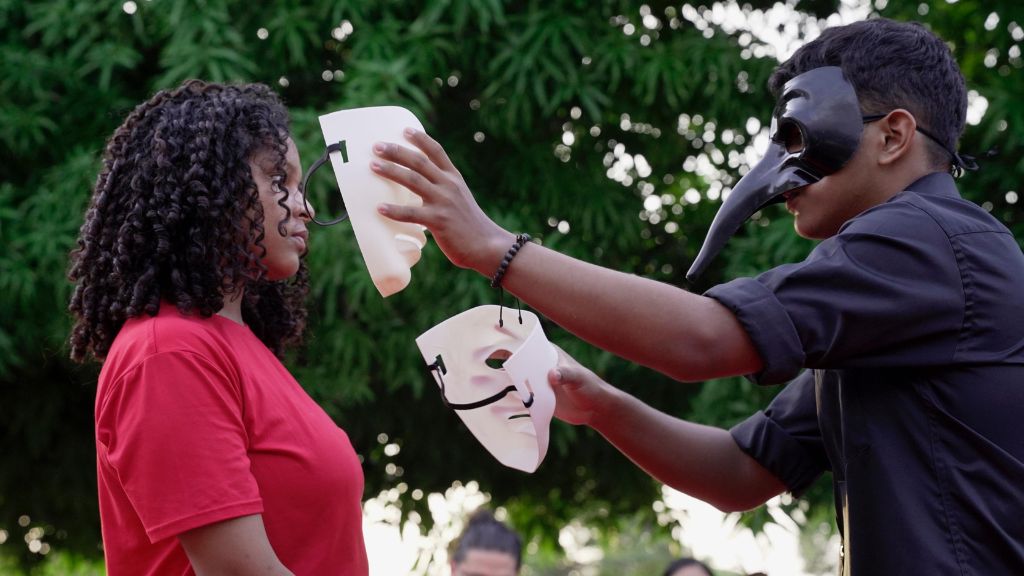
The line between silence and transformation is often fragile. In communities affected by sexual violence and gender-based violence (GBV), this line is shaped by fear, stigma, and deeply rooted social norms. However, young people are demonstrating that it can be overcome. When young people are given the tools to speak, create, and lead, this line can be crossed through the collective effort of their communities.
It was these persistent realities of sexual and gender-based violence in Colombia that prompted the creation of the Prosopon Collective, which emerged as an integral component of a broader initiative called Música Para La Paz, aimed at fostering youth leadership and civic engagement in response to these challenges. Over the past several months, the group of young leaders formed the Prosopon collective and has been engaged in a participatory social advocacy campaign developed in collaboration with Children Change Colombia (CCC), Iridian, la Universidad Reformada, and Música Para La Paz (MPP). The 2024–2025 Social Advocacy Campaign is grounded in a simple but ambitious premise: art can be a vehicle for community healing, awareness, and social change.
Art at the Center of Community Transformation
At its core, the campaign seeks to mitigate sexual violence and GBV through artistic expression. Rather than relying on externally imposed narratives, the process centers Colombia’s youth as creators, strategists, and messengers. Guided by the methodological expertise of CCC and Iridian, participants worked collectively to define their audiences, articulate messages, design visual identities, and map routes for community engagement within their own territory.
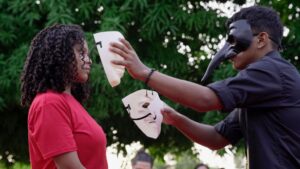
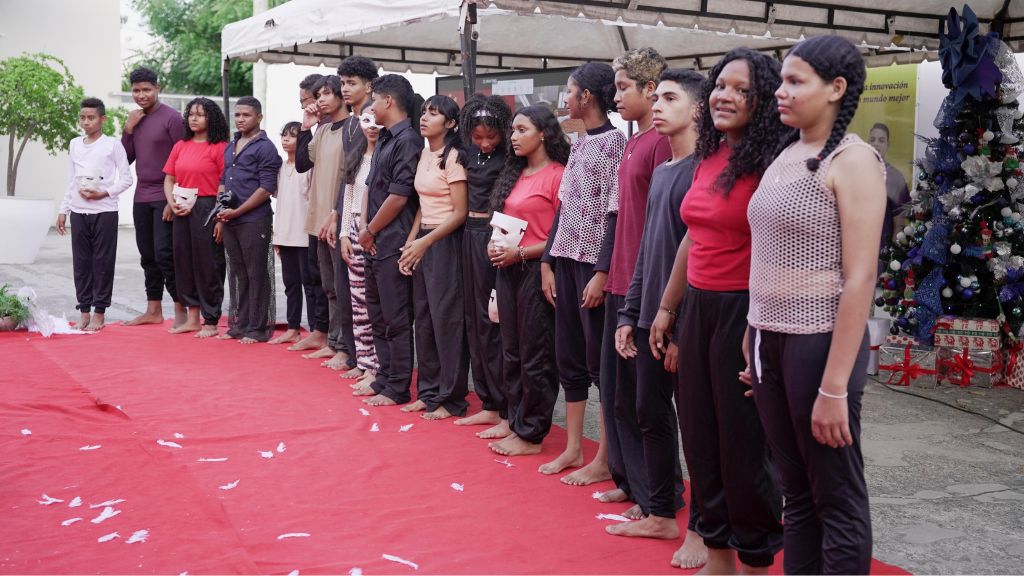
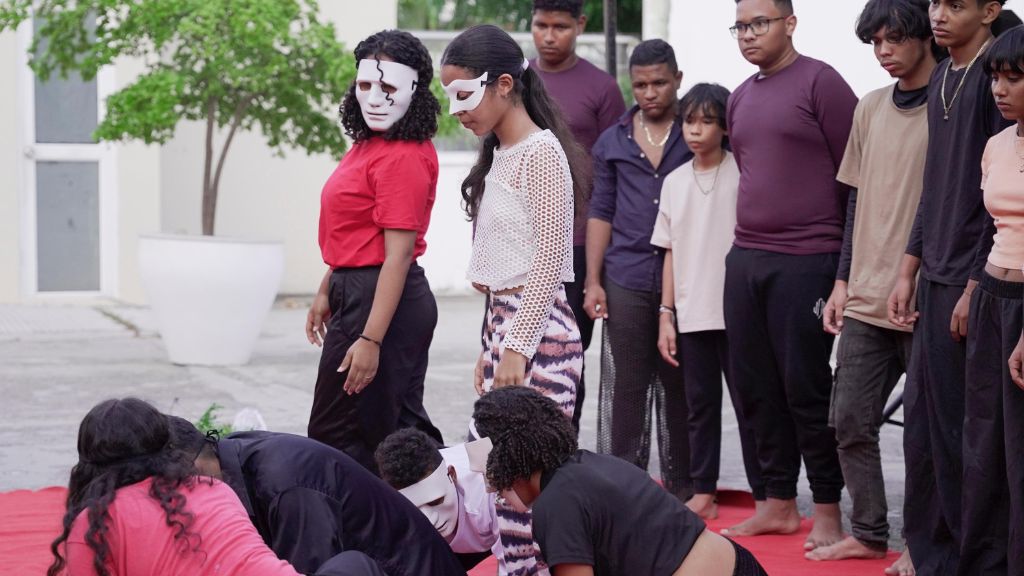
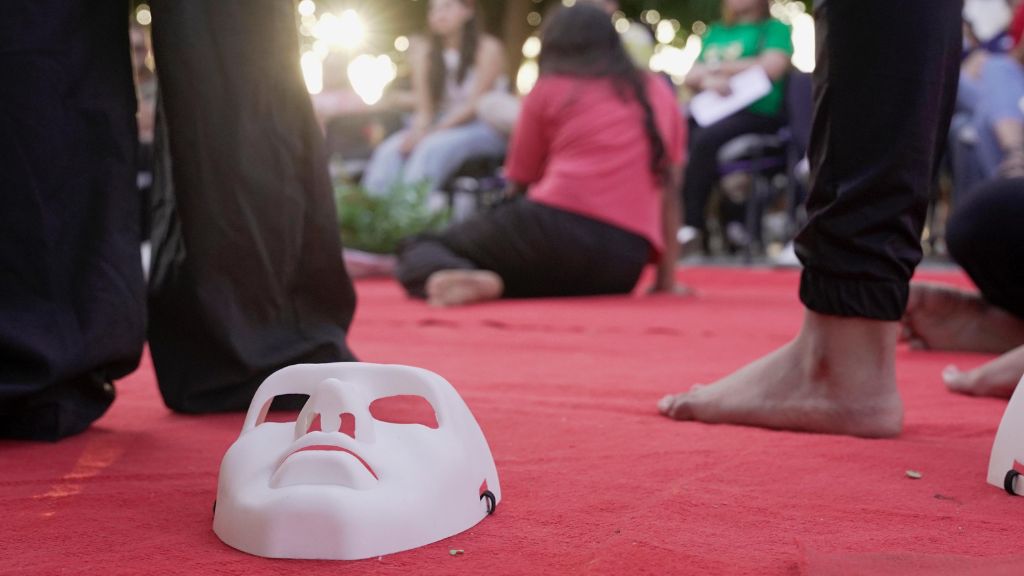
The campaign’s central outcome is “Tríptico SER” which is a performative work structured around three movements: Silence, Explosion, and Reconstruction. Created entirely by the young participants, the piece combines physical theatre and contemporary dance to explore the cycle of trauma, the urgency of breaking silence, and the transformative power of collective care. The work does not sensationalize violence. Rather, it invites reflection, empathy, and dialogue by emphasizing the resilience and agency of those impacted by GBV.
A Process Built on Participation and Care
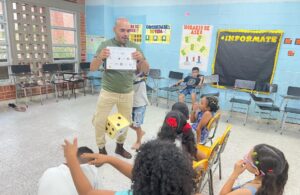
The development of Tríptico SER is the result of two months of sustained, intensive work. During this period, the group participated in three structured methodological sessions, developed three practical guides outlining campaign strategy, and collaboratively designed slogans, hashtags, symbols, and visual concepts. They also mapped key spaces within their community such as sports courts, public visibility points, and local schools as strategic locations for outreach and mobilization.
Equally important was the artistic process itself. Through rehearsals, experimentation, and collective reflection, the group defined the dramaturgy, corporeal language, symbolic narrative, and aesthetic direction of the performance. The result is not only a polished artistic piece but also a shared language through which difficult experiences can be acknowledged and addressed.
Beyond Performance: Building Ethical Advocacy
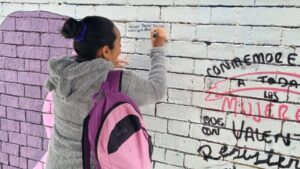
What distinguishes this campaign is its commitment to ethical storytelling and youth-led advocacy. The logos, sketches, photographs, posters, and audiovisual content produced are not detached communication assets. They are extensions of a process rooted in the consent, collaboration, and lived experiences of the community.
As the campaign enters its next phase, these materials will support a broader communications strategy led jointly with CCC and our academic partner, La Universidad Reformada to ensure that the voices of the young creators remain central. The campaign is not a one-off intervention: it is the beginning of a longer trajectory of community engagement and cultural change.
In contexts marked by violence, art alone cannot solve structural problems. But when young people are trusted as leaders, art can open spaces for dialogue, dignity, and collective imagination. Tríptico SER stands as a testament to what becomes possible when silence is confronted as a community rather than a solitary endeavour.
Written by Diego Mojica (CCC Intern)