On 24 November 2016, Colombia took a historic step towards ending more than five decades of armed conflict. In Bogotá, the Colombian government and the Revolutionary Armed Forces of Colombia (FARC-EP) signed a Peace Agreement, bringing hope to millions of families who had lived through generations of violence. For many, it represented the possibility of a different future: one where children could grow up without the fear of war.
Ten years later, that promise remains a work in progress. While the Agreement has brought meaningful change, its legacy is still being shaped by the communities, organisations and individuals working to make peace a reality.
A decade of progress, but a long road ahead
The Peace Agreement has delivered important milestones. According to the United Nations Verification Mission in Colombia, the country is more peaceful than during the peak years of the conflict. More than 11,000 former FARC members have remained engaged in the active reintegration programme established under the Agreement. There have also been significant advances in transitional justice, with the Special Jurisdiction for Peace (JEP) issuing its first sentences in September 2025, addressing crimes including kidnappings and extrajudicial executions.
Former President Juan Manuel Santos and former FARC commander Rodrigo Londoño have also continued to reaffirm their commitment to the Agreement, highlighting the importance of its full implementation. Yet, peace remains fragile in many parts of the country. Armed groups, including FARC dissident factions and the National Liberation Army (ELN), continue to operate in remote regions. Children remain particularly vulnerable: according to Human Rights Watch, approximately 1,500 children have been recruited by armed groups since 2021.
The Agreement was never going to resolve decades of conflict overnight. But it established an essential foundation for reconciliation, justice and the possibility of breaking cycles of violence.
Remembering the past to prevent its repetition
One of the most important commitments within the Peace Agreement was the creation of the Commission for the Clarification of Truth, Coexistence and Non-Repetition (Truth Commission). Its mission was to document what happened during the conflict, recognise victims’ experiences and help Colombian society understand the causes and consequences of violence. Its findings revealed the devastating impact of the conflict on children and young people. Between 1990 and 2017, the Commission documented 64,084 children and adolescents killed, 28,192 forcibly disappeared and 6,496 kidnapped. It also estimated that more than three million children were displaced and at least 16,238 recruited. These figures represent far more than statistics. Behind each number are children whose childhoods were disrupted, families separated and communities deeply affected by violence.
At Children Change Colombia (CCC), we believe that recognising these experiences and sharing the lessons of the Truth Commission are essential to building a more peaceful future.
Over the past decade, we have worked to bring these conversations beyond Colombia, ensuring that the experiences of victims and the rights of children affected by conflict remain part of international discussions.
In partnership with Rodeemos el Diálogo, CCC shared the recommendations of the Truth Commission’s chapter No es un mal menor with the UK’s Foreign, Commonwealth and Development Office, the All-Party Parliamentary Human Rights Group, and public audiences at the London School of Economics and the Colombian Consulate. We have also amplified the voices of young people from Generación V+, who are actively working to promote the Commission’s findings and keep its message alive.
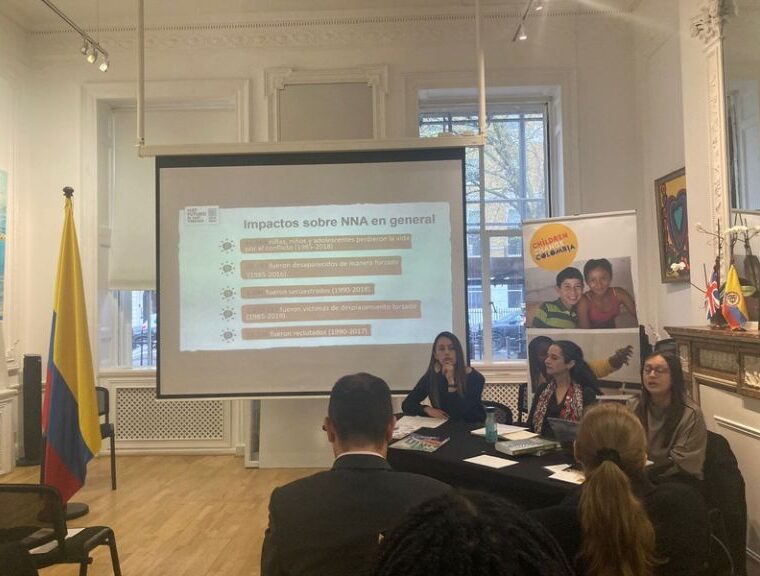
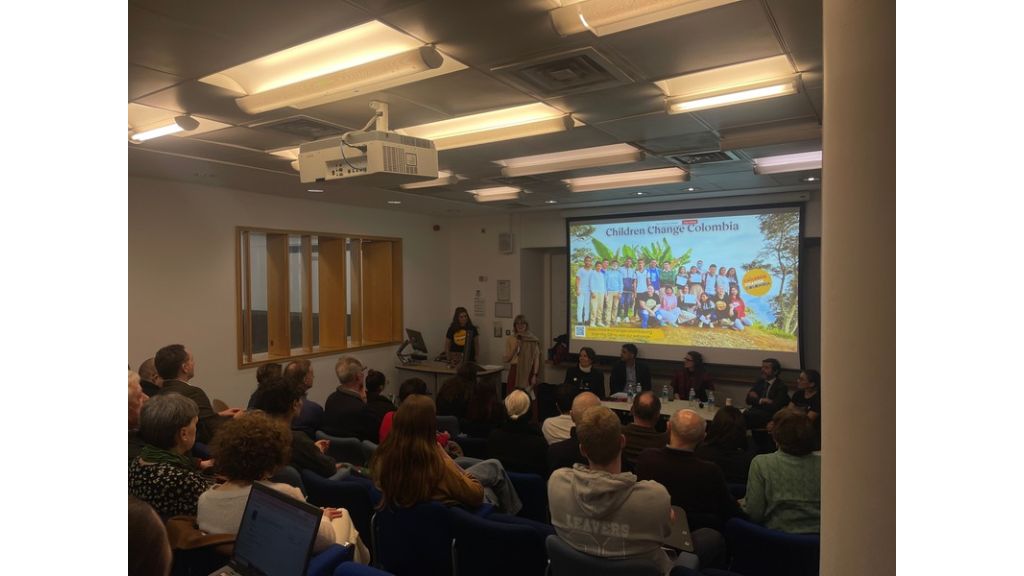
We have also held panel sessions such as our “Call for Change” event, to share with the London community more about the challenges and opportunities for peace in Colombia, featuring experts in the field. Academics and field workers presented findings from their research and projects related to conflict and peace in Colombia. We also shared the situation of forced recruitment of Children in Colombia at the UN with the Human Rights Centre from Loyola Law School, presenting a report on child forced recruitment in Colombia to the Committee on the Rights of the Child (CRC). Spaces like this are incredibly valuable for having open discussions on how we move forward with our efforts of peacebuilding and protecting children.
Making peace part of the next generation's story
For children who are ten years old today, the Peace Agreement is part of their country’s history, not a memory they have experienced themselves. Yet, many continue to face the consequences of Colombia’s uneven transition towards peace.
Armed groups are increasingly using social media to reach young people, promoting content that glorifies recruitment and presents life within armed groups as attractive. The Special Jurisdiction for Peace reported that social media was the recruitment channel for 44% of children recruited in 2025. This makes peace education more important than ever. Children need opportunities to understand their country’s history, recognise the dangers of violence and develop the confidence to imagine different futures.
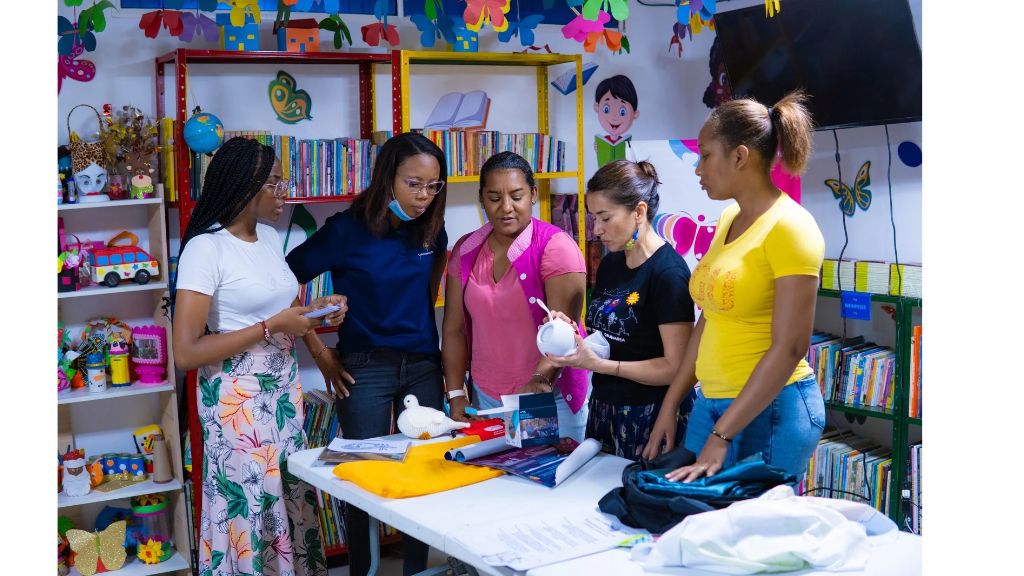
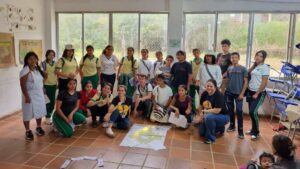
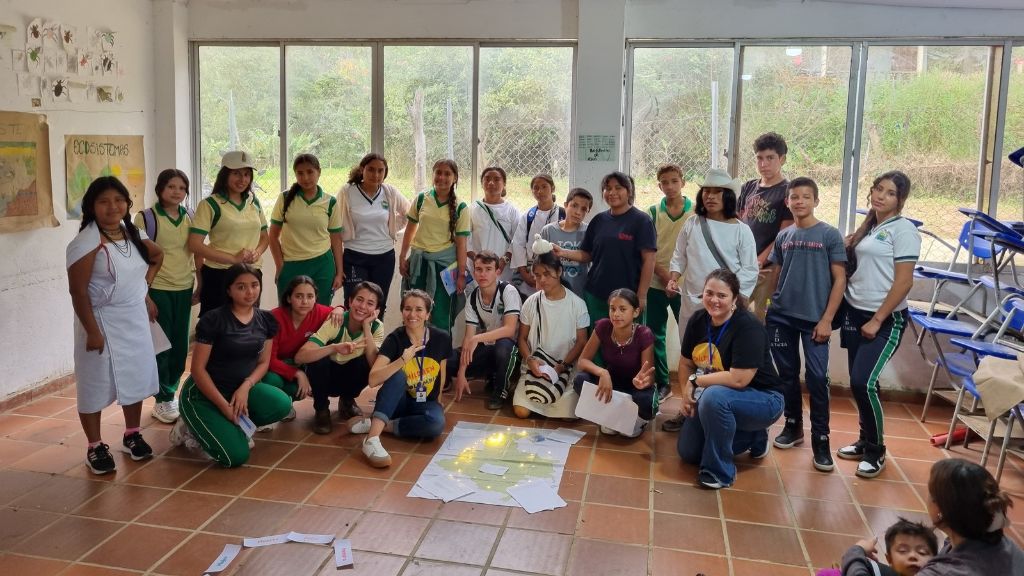
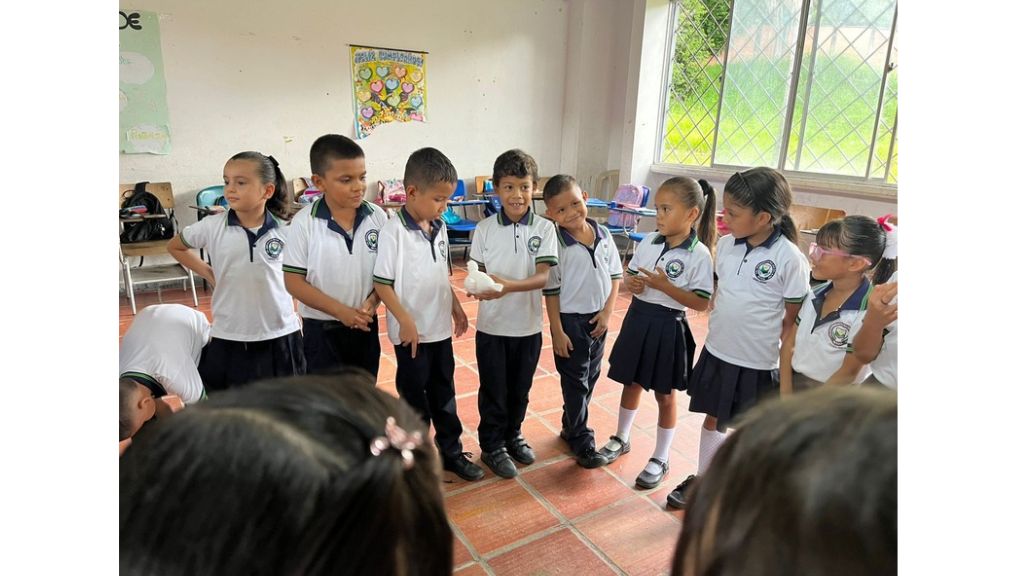
This is why CCC developed PazA la Mochila (The Peace Backpack), in partnership with educational and community stakeholders, as a way to bring the lessons of the Truth Commission into classrooms and communities. Designed as an accessible educational backpack, PazA la Mochila brings together stories, videos, songs, games, symbolic materials and creative activities that encourage children to explore Colombia’s history, the impacts of armed conflict, coexistence and the meaning of peace.
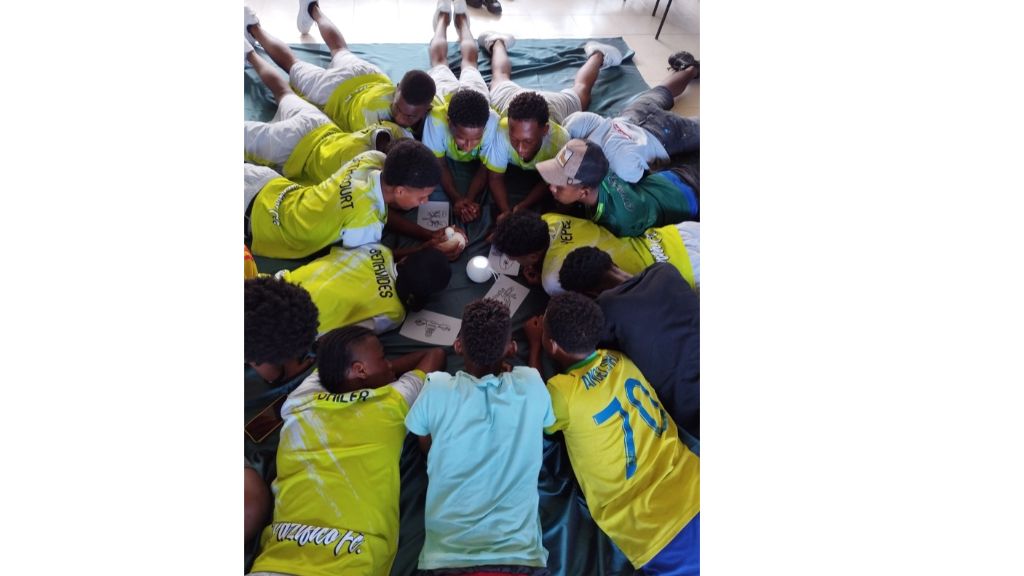
As of 2026, the “Paz a la Mochila” kit reached 25 municipalities and is serving as a tool for peace education and capacity-building to over 4,000 children. CCC has delivered 55 “mochilas”, with 30 new in preparation, and as a result of this program, 430+ teachers and community leaders can use these “mochilas” to further educate young people across Colombia. Rather than treating peace as an abstract political concept, the activities help children connect these themes to their everyday experiences, relationships and communities. They create opportunities to listen, express emotions, ask questions and learn how to resolve conflicts peacefully.
Accessibility is central to the project. Its physical resources can be adapted and used without internet access, making peace education possible in communities where digital connectivity and educational materials are limited. Teachers, community leaders and social practitioners can incorporate the activities into their daily work, creating safe spaces for reflection and dialogue. One educator described how the backpack allows children to “open their hearts and talk about the various problems they live with in their lives and in their families”. These conversations demonstrate how peacebuilding can begin in the simplest of spaces: by giving children the opportunity to be heard.
Building peace, one generation at a time
Ten years after the signing of the Peace Agreement, Colombia has much to recognise and much more to achieve. Lasting peace cannot depend on political commitments alone. It must also be built through education, community participation, remembrance and the protection of children’s rights.
From sharing the Truth Commission’s findings with international audiences to amplifying young people’s voices and bringing peace education into communities through PazA la Mochila, Children Change Colombia remains committed to ensuring that the lessons of the Agreement reach the next generation.
Peace is not simply about remembering what happened or preventing history from repeating itself. It is about creating a future where children have the freedom, opportunities and support to build something different.
Ten years ago, Colombia took an important step towards peace. The next ten years must be about making that promise a reality for every child.
Written by: Diego Mojica – CCC Projects and Communications Intern | Patricia Montenegro – Project Staff