Background
In the morning of August 10, 2026, an earthquake measuring around 7.4 on the Richter scale struck western Colombia. According to the United States Geological Survey, the epicentre of this earthquake was roughly 240 kilometres west of Bogotá, and it was at a depth of around 110 kilometres. Apart from the US Geological Survey, the head of Colombia’s Geological Service, Julio Fierro Morales, described it as “the strongest earthquake the country has recorded in the past decade”. The shocks of this tremor were felt not only across major cities including Bogotá, Cali and Medellín but also caused severe damage in rural regions such as Chocó, the Coffee Axis region and Valle del Cauca. Due to the casualties and damages incurred, Colombia’s government then declared a state of national disaster and activated an emergency plan to coordinate the search and rescue response.
What we have reported previously
In the first update published in late August, we relayed figures from Colombia’s National Unit for Disaster Risk Management (UNGRD) with information current to August 31. At that point, 331 people were reported dead, 4,505 injured, 136 missing and 364 rescued. Regarding the regions and populations impacted, UNGRD reported that the earthquake affected 16 departments and 497 municipalities which impacted approximately 225,024 families and 449,442 people. Moreover, officials recorded that exactly 198,720 homes were damaged, 37,255 destroyed and 646 buildings collapsed.
By our second update posted during the month of October, the UNGRD’s reporting has shifted to the Registro Único de Damnificados (RUD). RUD is a registry through which municipalities, with the support of the National Disaster Risk Management System, compile information from affected households. In RUD’s report from October 2, 2026, it recorded that the earthquake had impacted around 364,664 families and 778,285 people. Moreover, it also reported that there were approximately 19,148 destroyed homes and 119,748 damaged homes. The UNGRD has not published a breakdown by municipality or department, and these housing categories should not be added together as the registry does not clarify whether a single home can appear in more than one. Another factor to consider when viewing the data from the RUD is that this registry differs in method from the emergency tallies reported in August, so the figures are not directly comparable. Furthermore, the sharp rise in registered families and people most likely reflects municipalities completing their registration process rather than new damage. In regards to the national death toll from the earthquake, official figures didn’t change from the 331 deaths initially reported on the 31st of August. As of November, there have been no further noticeable updates to the figures from RUD, as available reporting with figures are in the margin of error of those provided by the report on the 2nd of October.
Recap of Chocó and the San Juan basin
Chocó is a department lying near the epicentre, and the department is one of Colombia’s poorest. Moreover, many Afro-Colombian and Indigenous communities call this place home. Due to long-standing underinvestment in infrastructure and public services, the people of this region already faced significant gaps in basic provision before the earthquake. The earthquake’s aftermath further deepened these vulnerabilities as it left many children and families to cope with a limited resource base that is facing even further constraints.
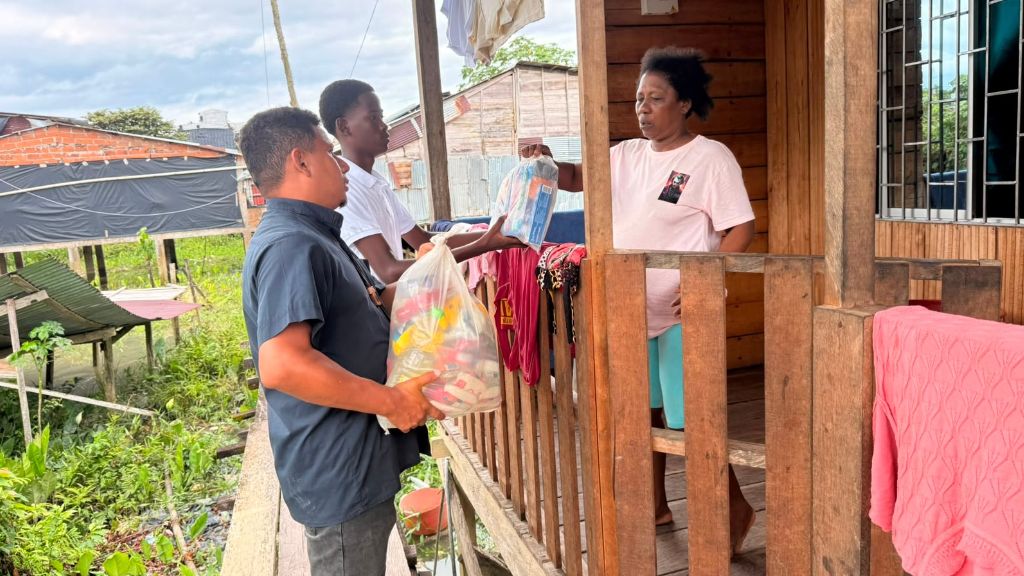
Within the San Juan river basin, Children Change Colombia (CCC) has actively worked alongside ACADESAN to address the destruction of critical infrastructure caused by the earthquake. ACADESAN (Consejo Comunitario General del San Juan, formerly Asociación Campesina del San Juan) is one of the founding ethnic-territorial organisations of Colombia’s Afro-descendant movement, and it achieved collective land titling in December 2001. Today, it represents 15,513 people in 1,255 families and is organised into eight zones across the municipalities of Istmina, Medio San Juan, Sipí, Nóvita, Litoral del San Juan, and Buenaventura.
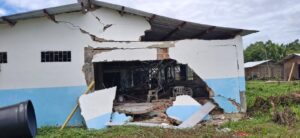
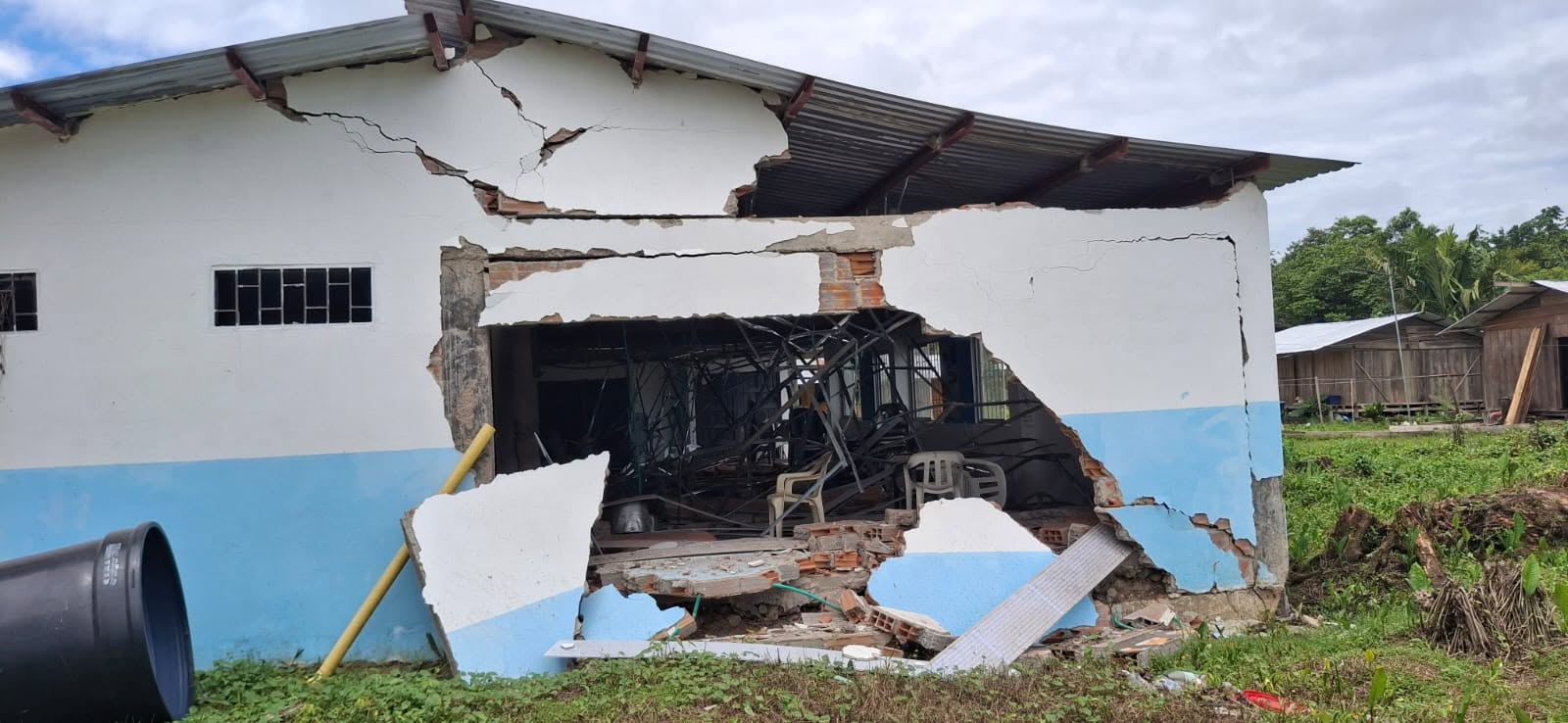
Following the earthquake, there have been no confirmed deaths in ACADESAN territory, and one person initially reported missing was found alive. Unfortunately, most communities in the region remain without electricity, and the majority have reported partial or total housing loss. Furthermore, several schools and the shelters in Istmina sustained structural damage. More recent accounts from Felipe Nery Martínez Arboleda of ACADESAN and Angela Carreno of CCC reveal the scale of the devastation. In their accounts, they mentioned that communities like Charco Largo – La Unión have been hit hard, as ACADESAN communities losing an average of around 90 homes each. The disaster has also coincided with a rise in attacks by illegal armed groups across the 72 communities ACADESAN serves, including a 23 August confrontation in Istmina that left three civilians injured. In Taparal and Cajón, there has been an increase in displacement due to flooding in the region. As a result of these overlapping crises, there were disruptions of initial distribution of assistance, but Children Change Colombia has been able to organise alongside ACADESAN to begin the process of recovery.
What CCC has done
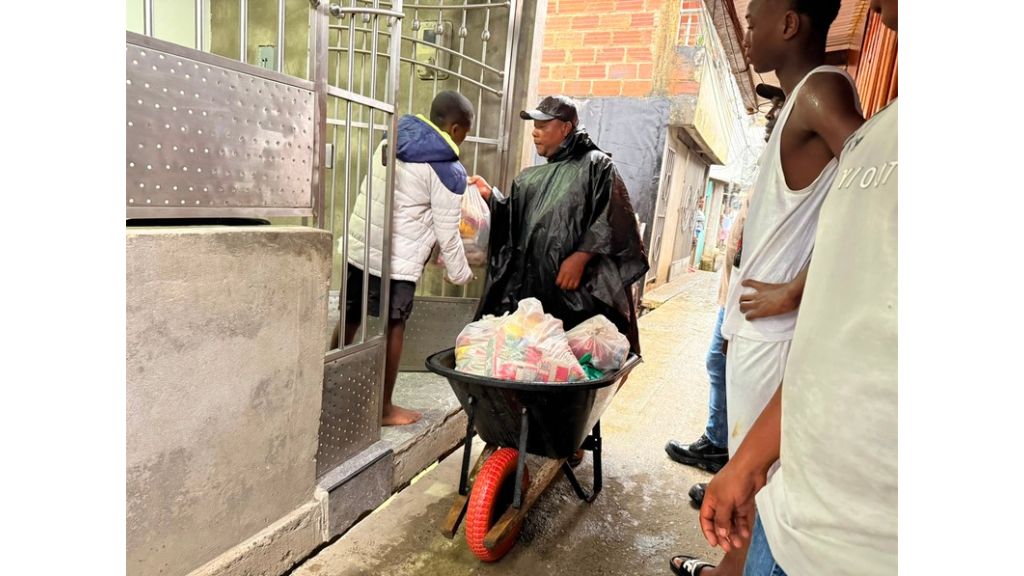
In our October update, we provided updates on the £100,000 raised for reconstruction in Chocó and our collaboration with ACADESAN, the Diocese of Quibdó and Patrulla Aerea Colombiana. In this November update, we are able to provide some updates and information about what our collaboration with each has entailed thus far. Moreover, this November update is also pleased to announce upcoming support from another regional partner: Granja Infantil Jesús de la Buena Esperanza.
Currently, our work with ACADESAN has focused on the distribution of food supplies to ensure access to emergency meals, basic reconstruction materials such as roofing sheets, and transport support to ensure the delivery of the aforementioned supplies. Regarding the reconstruction materials, we should note that these materials are for the repair of partially damaged homes rather than for full reconstruction. As of November, we can report that we have finished the first part of the response, distributing construction materials and food in the most affected communities.
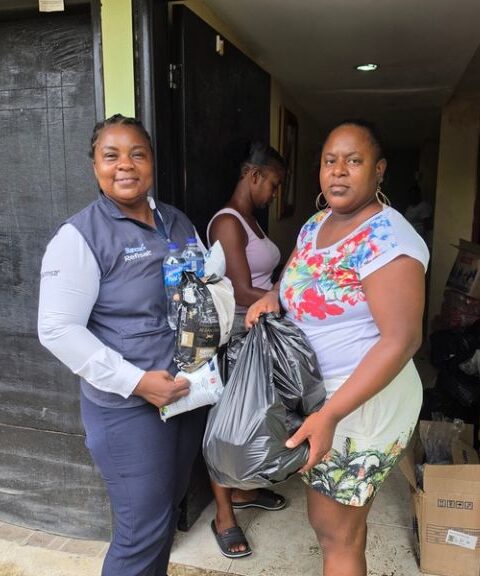
In December, we will start phase two that will focus only on the distribution of construction materials, and we are analysing the damage of the shelter with an engineer to repair the damages caused by the earthquake.
With our partner the Quibdó Diocese, we have also been able to provide food kits to support 230 families, which represents around 1,150 people, in the town of Quibdó. Moreover, as of November, we can also report that the Diocese is also providing one psychologist training in Children Accelerated Trauma Treatment in order to have a specialist capable of providing specialised psychological aid to children impacted by the earthquake’s aftermath. With their support, we are closer to fulfilling our goal of supporting the mental health of the families and children in Chocó.
Furthermore, this November update is pleased to announce upcoming programs provided by both Granja Infantil Jesús de la Buena Esperanza in Pereira and Patrulla Aérea Colombiana in Chocó. Alongside Granja Infantil, we are providing financial support for the reconstruction of child protection facilities operating in Pereira that supports 116 children between the ages of 7 and 17 years, who are in the process of adoption. Regarding our upcoming work with Patrulla Aérea, we are working on an initiative that will provide specialised paediatric healthcare and follow-up support for children impacted by the long-term health impacts of the 2026 earthquake. The paediatric care provided will include medical consultations, treatment, referrals and a pilot program focusing on providing virtual follow-ups to ensure and improve the continuity of care. From this program, we are aiming to support 300 children from Chocó and Cauca during the first semester of 2027.
How You Can Help
Firstly, on behalf of CCC, I would like to thank everyone who has donated to help in our emergency response. Because of your support, we have been able to implement phase one alongside our regional partners. Although your support is already making a difference, there is still a great deal to do. As mentioned, the programs for immediate support are ongoing, even as we look to address the health concerns of children impacted in the near future. Based on our assessment during this month, CCC still remains steadfast in implementing the following four goals with our generous donations:
- Help with the reconstruction of homes and communities.
- Help restructure the livelihoods of the families affected.
- Pediatric brigades
- Mental help support to the victims
With your generous support, we can fulfil these goals. If you wish to further help the people of Chocó, please donate through this link to help CCC support communities in Chocó as they rebuild from the aftermath of this devastating Earthquake.
Written by: Diego Mojica | Communications and Projects Intern