Background
During the morning of August 10, 2026, a powerful earthquake measuring around 7.4 on the Richter scale struck western Colombia. According to the United States Geological Survey, the epicentre of this earthquake was roughly 240 kilometres west of Bogotá at a depth of around 110 kilometres. The head of Colombia’s Geological Service, Julio Fierro Morales, described it as “the strongest earthquake the country has recorded in the past decade”. The shocks of this tremor were felt across major cities including Bogotá, Cali and Medellín, and it also caused severe damage in Chocó, the Coffee Axis region and Valle del Cauca. Due to the casualties and damages incurred, Colombia’s government declared a state of national disaster and activated an emergency plan to coordinate the search and rescue response.
What we reported in August
In our previous update published in late August, we relayed figures from Colombia’s National Unit for Disaster Risk Management (UNGRD) with information current to August 31. At that point, 331 people were reported dead, 4,505 injured, 136 missing and 364 rescued. Furthermore, infrastructure damage affected 16 departments and 497 municipalities which impacted approximately 225,024 families and 449,442 people. Officials had recorded that exactly 198,720 homes were damaged, 37,255 destroyed and 646 buildings collapsed.
Latest UNGRD figures
As the emergency phase has given way to reconstruction, the UNGRD’s reporting has shifted to the Registro Único de Damnificados (RUD). The RUD is a registry through which municipalities, with the support of the National Disaster Risk Management System, record affected households. With a cut-off of October 2, 2026, the RUD has registered around 364,664 families and 778,285 people. Moreover, it also reports 84,857 habitable homes, 104,049 uninhabitable homes, 19,148 destroyed homes and 119,748 damaged homes. The UNGRD has not published a breakdown by municipality or department, and these housing categories should not be added together since the registry does not clarify whether a single home can appear in more than one. The registry also differs in method from the emergency tallies reported in August, so the figures are not directly comparable. The sharp rise in registered families and people most likely reflects municipalities completing their registration process rather than new damage. In regards to the national death toll, official figures have registered 331 deaths due to the earthquake.
Watch this video to hear from the team in the territory and see the work we’ve been carrying out.
Impact on Chocó and the San Juan basin
Chocó is a department in Colombia which lies near the epicentre and is one of Colombia’s poorest and many Afro-Colombian and Indigenous communities call this place home. Due to long-standing underinvestment in infrastructure and public services, the people of this region already faced significant gaps in basic provision before the earthquake. As a result, the disaster has deepened these vulnerabilities as it left many children and families to cope with an already limited resource base under even greater strain.
Within the San Juan river basin, where Children Change Colombia (CCC) works alongside ACADESAN, the earthquake’s main impact has been the destruction of critical infrastructure. Our main regional partner ACADESAN (Consejo Comunitario General del San Juan, formerly Asociación Campesina del San Juan) is one of the founding ethnic-territorial organisations of Colombia’s Afro-descendant movement. It achieved collective land titling of its ancestral territory in December 2001 (Resolution No. 02702) under Law 70 of 1993. Today, it represents 15,513 people in 1,255 families and is organised into eight zones across the municipalities of Istmina, Medio San Juan, Sipí, Nóvita, Litoral del San Juan and Buenaventura.
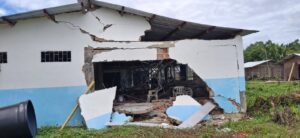
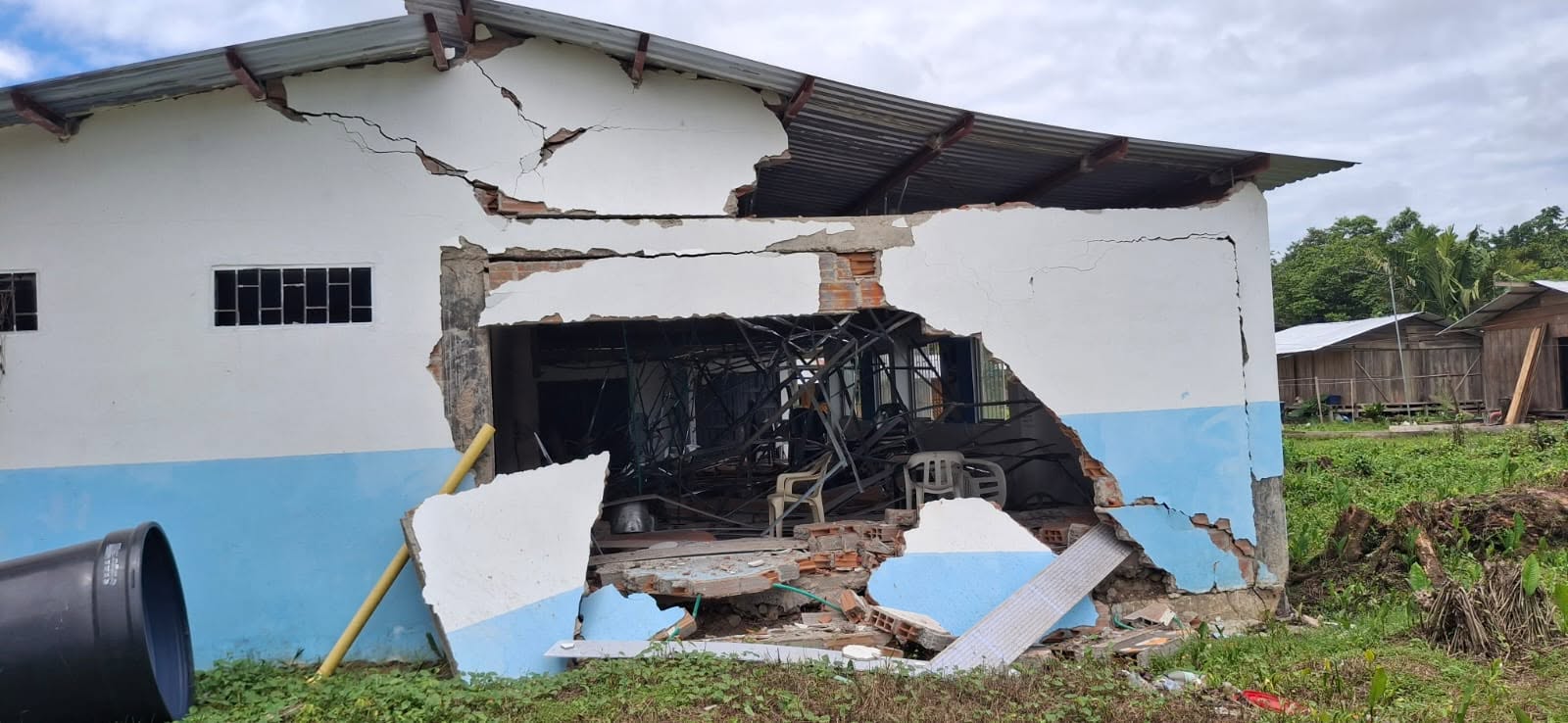
Due to the earthquake’s aftermath, widespread power outages and connectivity failures slowed the damage assessment. As of 21 August 2026, initial findings indicated no confirmed deaths within ACADESAN territory. One person was initially reported missing but was fortunately found alive. Most communities in the region remain without electricity, the majority reported partial or total loss of housing. Furthermore, several schools had sustained structural damage, and the shelters in Istmina had suffered partial damage.
More recent accounts from Felipe Nery Martínez Arboleda of ACADESAN, in conversation with Angela Carreno of CCC, show the scale of the damage. Communities such as Charco Largo – La Unión have suffered heavily, and ACADESAN communities have lost an average of around 90 homes each. The disaster has also coincided with a rise in attacks by illegal armed groups in several of the 72 communities that ACADESAN works in. On 23 August, a confrontation between the community of Istmina and illegal armed groups left three civilians injured, just days after the earthquake. Communities in Taparal and Cajón, already affected by flooding, have also seen displacement. Unfortunately, this is a territory that suffers from several overlapping crises at once, and these crises have negatively impacted the initial distribution of assistance. However, we at Children Change Colombia have been able to organise alongside ACADESAN to begin the process of recovery.
What CCC has done
So far, CCC has been able to raise £90,000 for reconstruction in Chocó and has been collaborating with three local partners. With ACADESAN in Istmina to distribute basic needs and building materials so that damaged homes can be rebuilt and food support. ACADESAN has focused on three main tasks. It has documented the damage experienced, attended to the roughly 140 displaced families who arrived in Istmina, and begun compiling a clear and precise database of those affected so that aid can reach the communities that need it most. CCC and ACADESAN have also worked with CCC’s team on distributing emergency items and characterising affected regions.
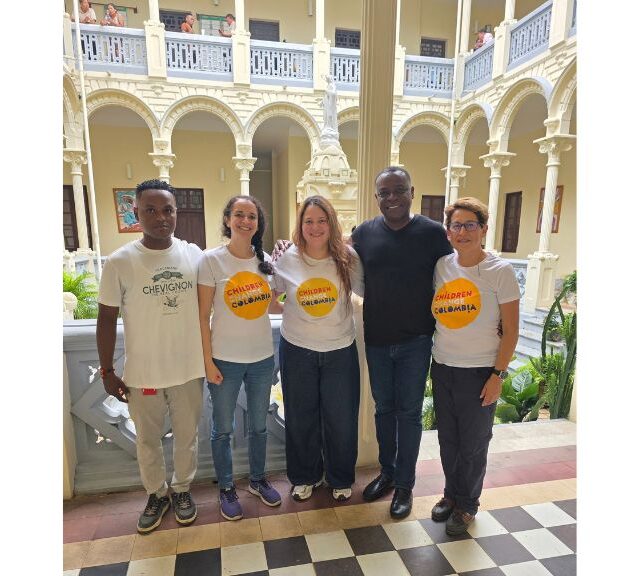
CCC is also supporting 200 affected families in Quidbó thanks to the new partnership with the Diocese of Quibdó. They are receiving food parcels and toiletries. And there is also a new alliance with the Patrulla Aerea to provide pediatric brigades to the remote areas affected by the earthquake, supporting more than 300 children.
There are also in the pipeline activities related to livelihood recovery and psychosocial support for children with post-traumatic stress.
The shelter
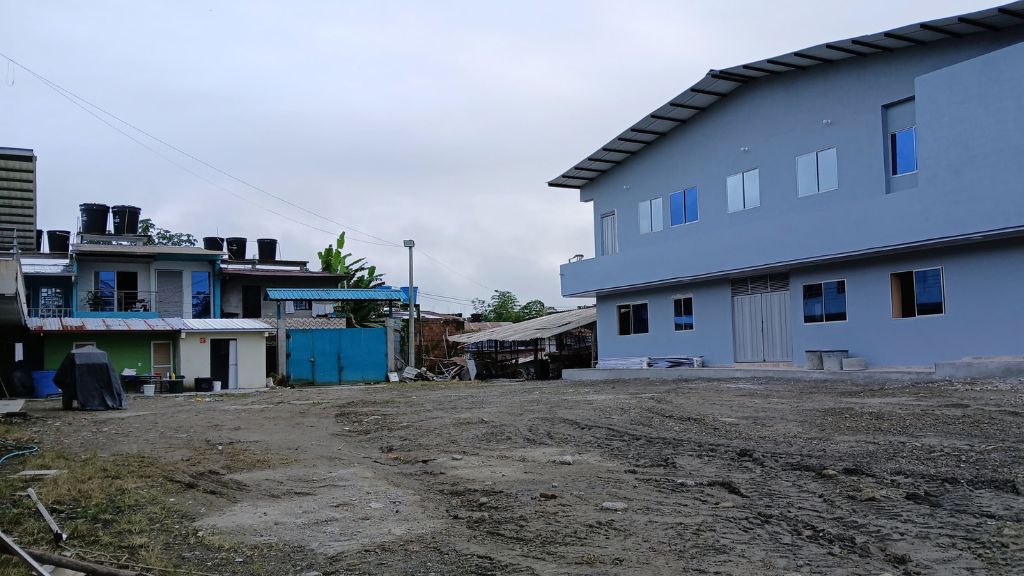
A key part of this response is the two-storey shelter that CCC built in 2025 for internally displaced families from ACADESAN communities who travel to Istmina when their lives are in danger. This year, it has housed many displaced people and received donated first aid material. Asked what the shelter means to the community, Felipe’s answer was simple: “everything”.
The shelter also functions as a community centre. Dozens of people from the community and from other organisations have stayed there before the earthquake, and many prefer it to local hotels because of its community atmosphere. Since the earthquake, it has become the collection point where aid is gathered, registered, packed and sent on to neighbouring affected communities. Items collected thus far have included blankets, towels, sheets, mattresses, diapers, hammock kits, solar lamps, food, animal and pet feed, bottled water and medicine for the municipality of Litoral. Medicines that could not be given to specific communities, owing to limited capacity or need, have been donated to the Medio San Juan health centre in Andagoya and to the Eduardo Santos Hospital in Istmina. Unfortunately, the upper floor remains closed for safety reasons following the earthquake.
How You Can Help
Thank you to everyone who has donated. Your support is already making a difference, and there is still a great deal to do. Based on our assessment in conjunction with local partners, CCC has four main goals for donations in Chocó:
- Help with the reconstruction of homes and communities.
- Help restructure the livelihoods of the families affected.
- Pediatric brigades
- Support for the mental health of the families and children
With your support, we can fulfil these goals. If you wish to further help the people of Chocó, please donate through this link to help CCC support communities in Chocó as they begin to rebuild.
Written by: Diego Mojica | Communications and Projects Intern