ACOSO CALLEJERO IN COLOMBIA
“ Hola, mi amor, ¿a donde vas?”
Diana walks to the supermarket to buy groceries for her family. Three minutes away from her house, she had not anticipated any interruptions. On her way, she spots a man in his forties. He is leaning against the wall of the D1 shop. Seeing Diana, his face changes from serious to something more intimidating, yet far from unusual.
“ Preciosa, hermosa, mamasita ”
Hearing these words, she freezes. Head glued to the ground she walks on, not wishing to be seen as vulnerable. In the corner of her vision she sees the man pursuing her, all the while looking her up and down. The moment ends as quickly as it began. Reaching the safety of the supermarket, staff rush to her assistance but Diana’s pursuer is nowhere in sight. At just 19 years old, she is no stranger to sinister encounters like this one :
“I don’t remember the first time it happened, but every time is as nerve-shattering as the last”
Diana, 19
CATCALLS OR COMPLIMENTS ?
Today, catcalling, or acoso callejero, presents a considerable challenge throughout Latin America. In Cali, for instance, one in four women has been victim of catcalling, which encompasses anything from persistent staring and whistling to calling out obscene comments, in ways that usually express unwanted sexual attention.
Unlike Portugal, Mexico, and Canada, Colombian law does not yet specifically criminalise street harassment. Still, its detrimental impacts are well documented, classified as a form of sexual and gender based violence (SGBV). 56% of girls affirm that catcalling negatively impacts their social lives. The freedom for women and girls like Diana to peacefully occupy public spaces is broken by such interactions. They are encouraged to stay silent, head down, and ignore the unacceptable behaviour of others. Catcalling leaves many girls feeling unsafe, anxious, or exposed, and can teach them from a young age that they need to alter their behaviour to accommodate others.
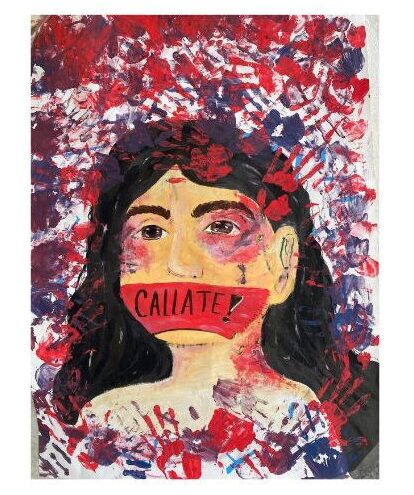
Young girls are taught to blame themselves for inciting this behaviour in others, taught to wear long clothes, and told to stay silent- passive in the face of active discrimination. At such a critical age in the formation of their self-identity, they are both at the highest risk from catcalling and often those to whom it happens the most :
“The first time they yelled at me in the street I was 13, I still remember the green sweater I was wearing and the pizza shop on 116 Street I was passing by. It was during the day, I didn’t get why elderly men would shout sexual comments to someone of my age”
Angela Carreño | Executive Director of Children Change Colombia
And yet, many across Latin America conflate discriminatory catcalls with ‘piropos’, compliments or flattering comments traditionally given by men to women. This forms the basis of a culture of street courtship, which has lingered in hispanic societies since the 19th centuries. This practice originated when Spanish aristocratic men gave compliments to women as a way to admire their beauty and graciousness. In a small town in Mexico, for instance, the men and women are expected to walk on opposite sides of the street in order to ‘check each other out’ when passing. However, it has since become more likely for ‘piropos’ to take on a vulgar, threatening tone, which is detrimental to girls and women who deserve to thrive in the public spaces in which they grow, like the supermarket three minutes from Diana’s home. Even when of a more flattering nature, women often feel unsafe to respond, silenced in their own communities.
NO ES PIROPO, ES ACOSO.
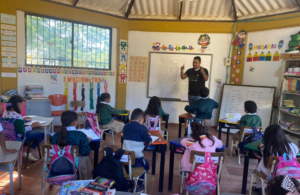
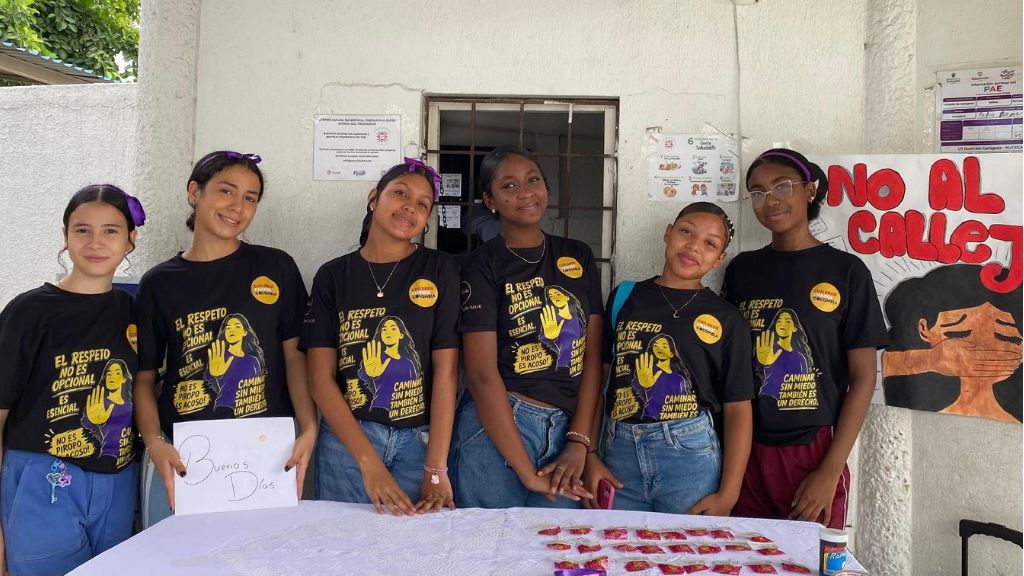
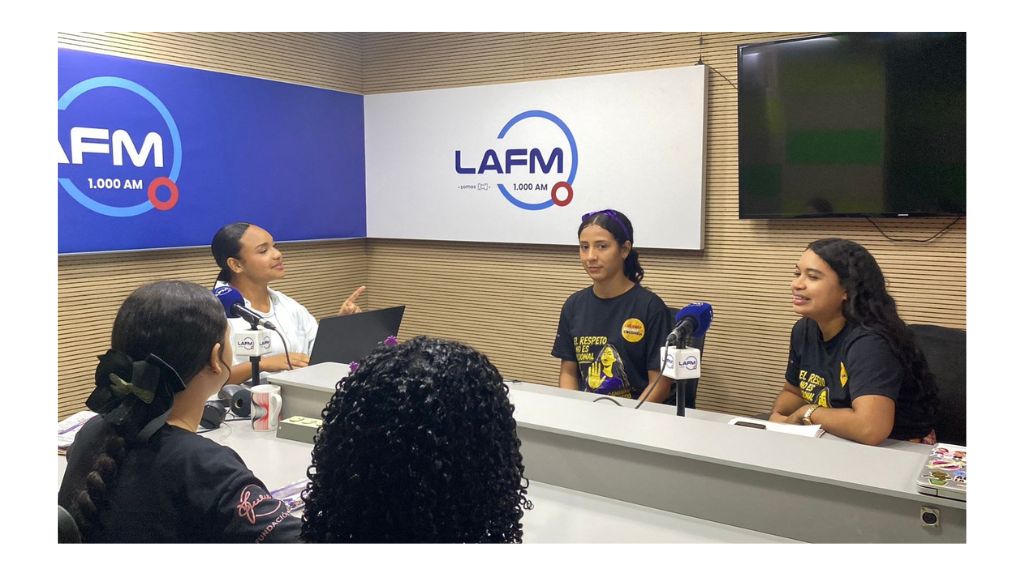
Last month in Cartagena, Colombia, Diana was part of a group of young women scholars who decided to lead a group of students aged 14 to 17 in Children Change Colombia and Fundación Julie’s project ’No Es Piropo, Es Acoso.’ Set in the backdrop of their very own classrooms, this issue of catcalling had been something identified by the young Colombians themselves- done with being silenced, these girls and young women wanted to talk. It was particularly important for them to talk openly with young girls, who are more vulnerable to catcalls influencing the way their self-identity develops. Active agents of change, these girls took back control over their experiences, connecting with others who, too, had experienced catcalling. The girls had the opportunity to share more about the campaign and raise awareness about ‘catcalling’ in a radio emission on La FM, talking about what they learnt together with Colombia.
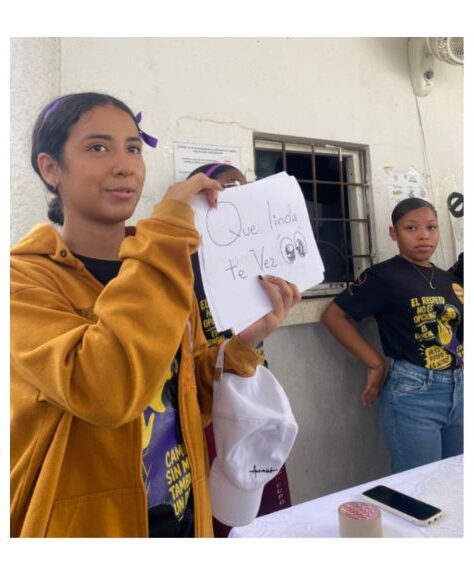
Diana describes how vital the element of connection was to her growing from the experience:
“What I want to share, above all, isn’t what I learnt from the workshop, but what I learnt from the girls around me, I mean the girls that took part. They showed me that I am not the only one that this has happened to. It is not our fault. Our clothes do not define if we will experience catcalling, and we should never accept this behaviour, and much less stay silent out of shame or fear. We are people, not toys.”
DIANA, 19
The workshops aimed to raise awareness in their school community about preventing street harassment, which, to many, was a normal part of every-day life. Equally, it gave the women and girls a chance to be emboldened as confident role models, who could go on to strengthen the school’s code of conduct by promoting a peaceful culture of equality. The leaders of the project empowered the younger participants to process catcalling in ways that did not threaten their self-identity and mental health, aiming to promote a future where girls and young women can learn and live free from violence, inside and outside of the educational setting.
SHOULDERING THE RESPONSIBILITY TOGETHER
Still, the responsibility to create this future is not one that falls to women alone. The behaviour and actions of boys and men play an undeniably crucial role in perpetuating the harmful practice of catcalling. Latin America’s machismo culture yet again proves harmful to both men and women, reinforcing men’s urge to seek dominance over pacified women and girls. With macho eyes everywhere, many men are pressured to conform to these violent gender roles by their peers, making catcalling more likely when men are in large groups. As per Virginia Acuna, a linguist and expert on gender-related language, piropos, even when thought to be flattering, are often used to denigrate women and establish power relations which put and keep men at the top. For example, men employed in positions of power over female subordinates, further entrench this power imbalance through piropos.
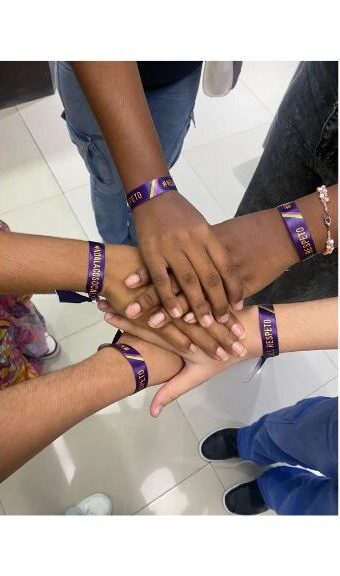
Yes, these problems exist, and they are substantial. And yet, the women and girls Children Change Colombia’s project is not alone in battling the issue of catcalling. Everywhere throughout Colombia, projects are now emerging which serve to help men escape the reinforced dynamics of machismo. For example, a new hotline in Bogota has opened to
Colombians are already uniting to do what is right to educate and empower men and women to step away from harmful machismo dynamics. For example, in 2020 a new hotline in Bogota appeared to help men struggling with feelings of jealousy, control, or fear. The Calm Line allows men over the age of 18 living in the capital to be “heard and oriented” at no cost. Further north in Barranquilla, Cali and Bucaramanga, the Mordecai Project leads conferences and retreats for men to overcome their machismo.
The key to changing dynamics is open dialogue. Diana is proud to say that she feels comfortable and often talks about her experiences of catcalling with the men and boys in her life. United, Colombians can continue on their path to a freer future.
WRITTEN BY TARA VIDAL VON RONN | Marketing and Fundraising intern
References
Alex. “The Mordecai Project.” Themordecaiproject.Org, 9 July 2017, https://themordecaiproject.org/team/womens-counseling-center-barranquilla-colombia/. Accessed 7 July 2026.
EL PAÍS. “No Thanks for the Compliment.” EL PAÍS English, Ediciones EL PAÍS S.L., 30 Mar. 2011, https://english.elpais.com/elpais/2011/03/30/inenglish/1301462442_850210.html. Accessed 7 July 2026.
El País. “¿Piropo O Acoso Callejero? Ley Que Penaliza Esta Conducta En Reino Unido Aviva El Debate En Colombia.” Noticias De Cali, Valle Y Colombia – Periodico: Diario El País, 30 Mar. 2023, https://www.elpais.com.co/entretenimiento/piropo-o-acoso-callejero-ley-que-penaliza-esta-conducta-en-reino-unido-aviva-el-debate-en-colombia.html#goog_rewarded. Accessed 7 July 2026.
Plan International UK. “The Problem with Catcalling.” Plan International UK, 2022, https://plan-uk.org/our-work/protection-from-violence/public-sexual-harassment/the-problem-with-catcalling. Accessed 7 July 2026.
Sakura, Soraya. “Did You Know Catcalling Is Illegal in These Countries?” Medium, 13 July 2022, https://medium.com/@SorayaSakura/did-you-know-cat-calling-is-illegal-in-these-countries-fe08de935663. Accessed 7 July 2026.
Turkewitz, Julie. “Hello? This Is Colombia’s Antimachismo Hotline..” The New York Times, 18 Oct. 2021, https://www.nytimes.com/2021/10/18/world/americas/colombia-machismo-hotline-masculinity.html. Accessed 7 July 2026.