As 2026 rolls on, Children Change Colombia remains committed to expanding our portfolio of educational projects, particularly in the rural regions of Colombia where access to opportunity is most limited.
We are excited to share details of two new initiatives launching this year: Solar Panels for Schools and the Interactive Science Toolkit.
Solar Panels for Schools
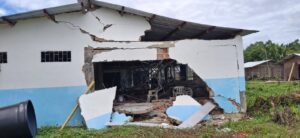
Energy poverty is a quiet but significant barrier to education across rural Colombia. An estimated 1.5 million homes across the country lack reliable access to electricity, and for the schools serving these communities that gap has real consequences for learning hours, for safety, and for community life beyond the classroom.
The Solar Panels for Schools project addresses this directly. CCC will install solar panels and control systems in six schools across La Guajira andVichada, replacing dependence on costly and polluting kerosene generators with clean, renewable energy. A key feature of the project is its financial design. Rather than operating as a one-time donation, this is a social investment initiative built for long-term sustainability.
Energy costs are heavily subsidised through existing government programmes for rural, unconnected regions, meaning participants pay just 10% of the standard rate. The income generated from those payments will cover installation costs within approximately 4.5 years, and will then be reinvested to bring the programme to additional locations.
The equipment itself is built to last: panels and systems carry a 10–15 year warranty and will be repaired or replaced free of charge if any issues arise. The systems are also small, portable, and fully offline, requiring no internet or cellular signal, making them well suited to the varied and sometimes remote settings in which they will be deployed. Critically, the project does not simply hand over technology and leave. At least one community member per school will be trained to manage and maintain the system, building local capacity and ensuring independence from outside support.
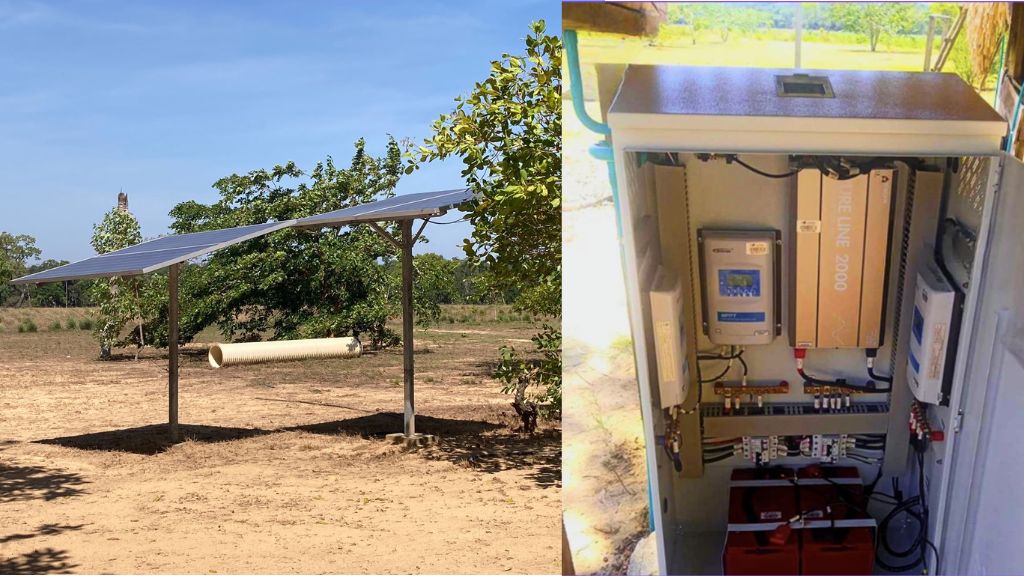
Evidence from previous installations by the solar panel company suggests the benefits extend well beyond the primary function of simple energy access. One third of households where panels have been installed stopped using kerosene or generators altogether, and two thirds significantly reduced their use. Furthermore, two thirds of prior participants reported an increase in household income through direct means such as operating a local charging station, selling iced goods, or through savings freed up by cheaper energy.
All the profit will be reinvested in the project and CCC will be able to reach more rural schools. We are proud to be bringing this initiative to schools in rural communities, and we look forward to seeing what comes next. The second phase of the project will include the equipping of educational technologies to the schools, such as the Interactive Science Toolkit.
Interactive Science Toolkit
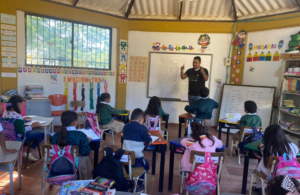
Across rural Colombia, children are growing up without access to the science, technology, and critical-thinking education that is increasingly shaping what opportunities the future holds. Hard-working teachers want to offer more, but often lack the resources and training to do so.
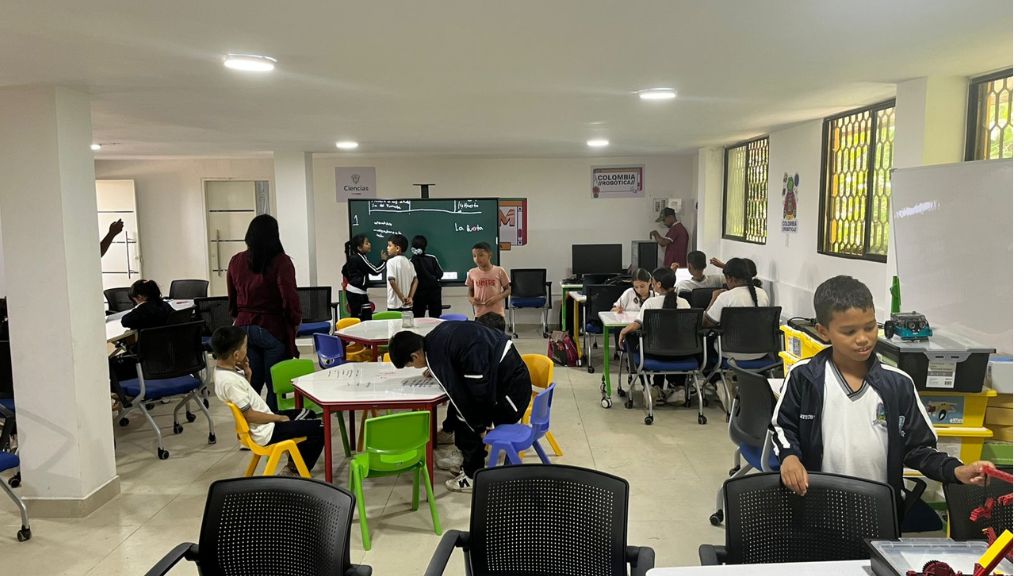
The Interactive Science Toolkit is CCC’s response to that challenge. Launching as a pilot from June to December 2026, the programme will be delivered to three primary schools in the Sierra Nevada de Santa Marta and reach over 400 students.
The toolkit brings together physical and digital resources designed around three core skills: problem solving, logical reasoning, and data analysis, which make up the building blocks of computational thinking, an approach to working through problems by breaking them into clear, ordered steps. These are the skills that employers and universities increasingly look for, and that many schools currently have a limited presence of in their curriculum.
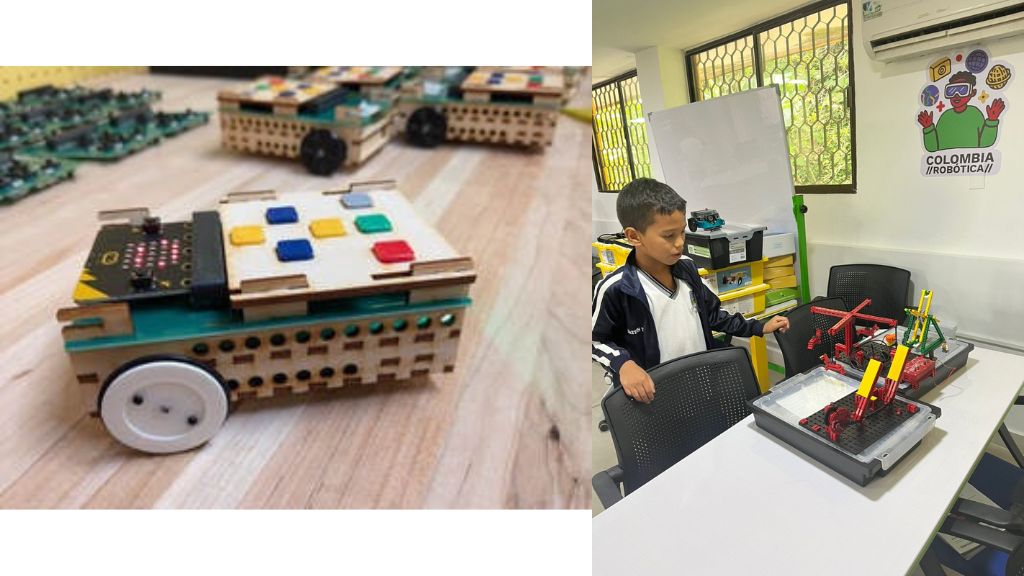
The physical resources in each toolkit include an interactive grid mat, a Roversa educational robot, 3D-printed programming arrows, thematic cards and pedagogical dice, and evaluation materials for unplugged activities. The digital resources include a teacher manual with curriculum guides, supplementary digital content, and platforms such as Pilas Bloques (block programming), AdaptedMind (maths reinforcement), and Mi Aula TEC, a theoretical reference for computational thinking.
The Roversa robot deserves particular mention. It is an innovative teaching tool that introduces basic programming concepts through hands-on, practical learning; no screen required to begin. This makes it genuinely accessible in low-connectivity environments, which was a central criterion in the toolkit’s design. That design process has been informed throughout by voices on the ground. CCC has spoken extensively with educators and experienced stakeholders to understand which tools are actually useful in these settings, and which are likely to gather dust. That experience has also shaped one of the most important elements of the programme: a structured teacher training course delivered at the start of each school’s rollout. CCC has seen too often that new resources go underused when teachers are not given proper guidance on how to integrate them into their teaching. In this case, the training component is not an add-on but is foundational to the project’s success.
The Interactive Science Toolkit is designed to be scalable and adaptable, suitable for a wide range of school environments, with or without consistent connectivity. We are excited by the opportunities that this project brings, and we will share the results of this pilot scheme on completion of the six month window, at the beginning of 2027.
Looking Ahead
These two projects reflect CCC’s broader belief that innovation in education is not just about technology for its own sake. It is about giving children and their communities the tools they need to shape their own futures. We look forward to sharing updates as both initiatives take shape over the coming months.
Written by: Arthur Mawer | CCC Programmes Intern
References
Estefany Garces,Julia Tomei,Carlos J Franco,Isaac Dyner Lessons from last mile electrification in Colombia: Examining the policy framework and outcomes for sustainability. Energy Research & Social Science– September 2021 https://www.sciencedirect.com/science/article/abs/pii/S2214629621002498