During the morning of August 10, 2026, a powerful earthquake, measuring around 7.4 on the Richter scale, struck western Colombia, with its epicenter near San José del Palmar in the department of Chocó. The United States Geological Survey placed the epicenter roughly 240 kilometers west of Bogotá, at a depth of around 110 kilometers. Furthermore, the head of Colombia’s Geological Service, Julio Fierro Morales, has described the earthquake as “the strongest earthquake the country has recorded in the past decade”.
The tremor was felt across major cities including Bogotá, Cali, and Medellín, and caused severe damage in Chocó, the Coffee Axis region, and Valle del Cauca. As of the most recent update, with information current to 6:30 am on the 21st of August, authorities report 321 people dead, 4,595 injured, 257 missing, and 364 rescued, with damage affecting 15 departments and 476 municipalities, impacting 146,188 families and 284,185 people. Furthermore, officials have also recorded 163,884 homes damaged, 31,445 destroyed, and 467 buildings collapsed. Due to the earthquake’s carnage, Colombia’s government has declared a state of national disaster and activated an emergency plan to coordinate the search and rescue response.
Chocó, which includes communities along the San Juan river basin and lies near the epicenter of the earthquake, is one of Colombia’s poorest and most historically marginalized departments, home to large Afro-Colombian and Indigenous communities who already faced significant gaps in infrastructure and access to services. This disaster has deepened these existing vulnerabilities as many children and families navigate an already limited resource base under even greater strain.
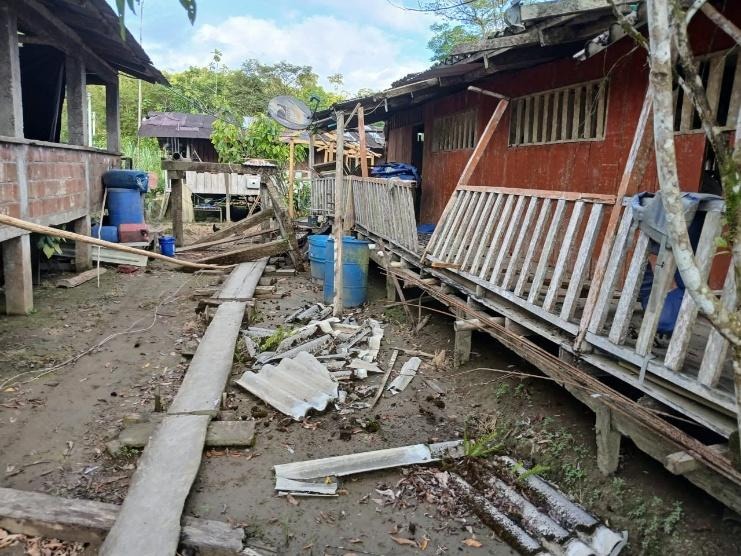
Within the San Juan river basin where Children Change Colombia is present alongside Acadesan, the earthquake’s main impact has been the destruction of critical infrastructure. ACADESAN (Consejo Comunitario General del San Juan, formerly Asociación Campesina del San Juan) is one of the founding ethnic-territorial organisations of Colombia’s Afro-descendant movement. It achieved collective land titling of its ancestral territory in December 2001 (Resolution No. 02702) under Law 70 of 1993, and today represents 15,513 people (5,712 men, 5,638 women and 4,163 children) in 1,255 families, organised into 8 zones across the municipalities of Istmina, Medio San Juan, Sipí, Nóvita, Litoral del San Juan and Buenaventura.
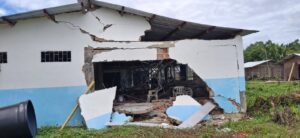
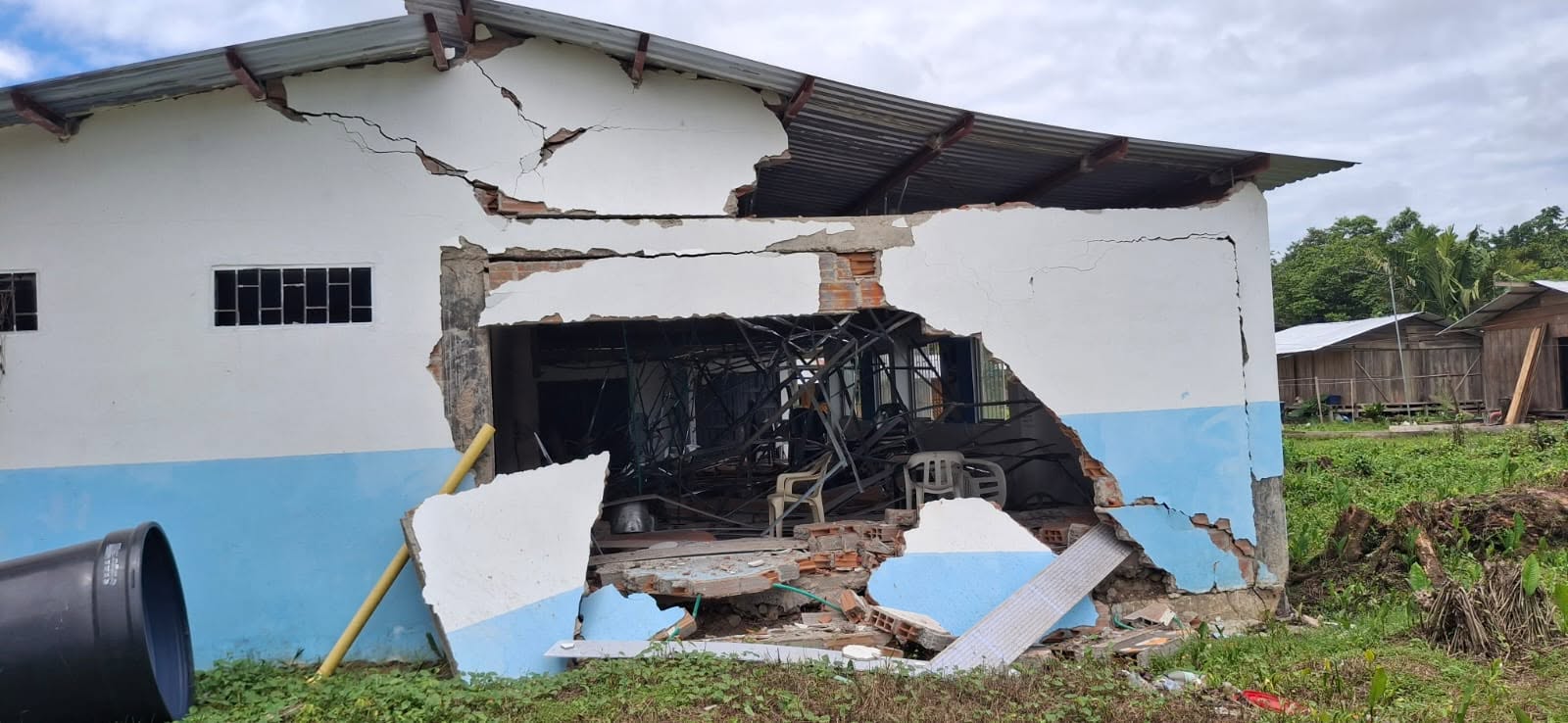
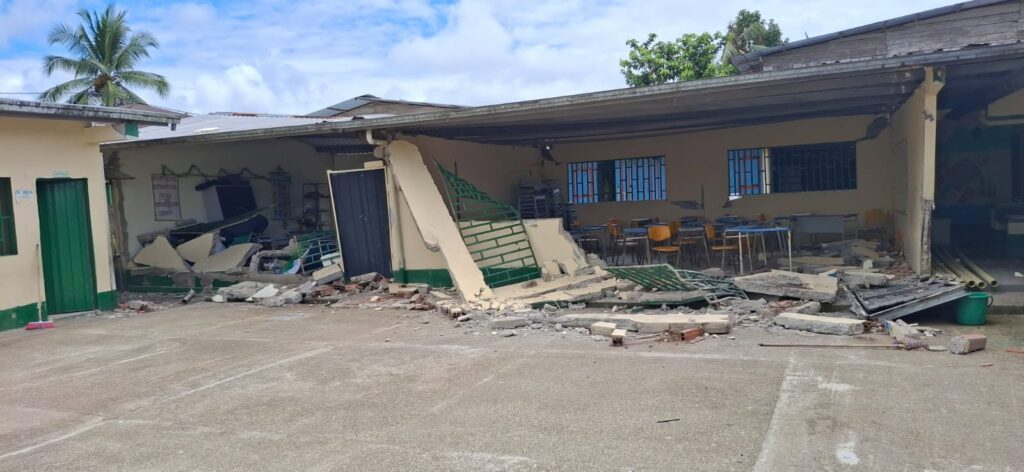
Widespread power outages and connectivity failures have slowed the damage assessment process compared to other parts of the country. As of August 21, 2026, initial findings from the ground indicate no confirmed deaths within the Acadesan territory, though one person was missing initially reported missing, but he was thankfully found alive. Most communities remain without electricity, the majority report partial or total loss of housing, several schools have sustained structural damage, and the shelters in Istmina have suffered partial damage.
What CCC Is Doing
Children Change Colombia is mobilizing to support relief efforts through our local partner in Chocó, Acadesan. Our organisations have been working directly in the San Juan river basin communities hit hardest by the earthquake. Our focus has been to ensure that children and families in affected communities have access to the support they need in the aftermath of this catastrophe, from humanitarian relief in the short-run to longer-term recovery and resilience.
Working with community leaders, Acadesan is coordinating an equitable distribution of aid, prioritizing communities with the greatest vulnerabilities and the least access to government or other institutional support. After assessing the damage, our organisations have identified three priorities for our initial humanitarian relief efforts:
- Community food kits: provisions to sustain communities through the clean-up and initial reconstruction phase, distributed for communal cooking (olla comunitaria) that benefits entire communities rather than individual households.
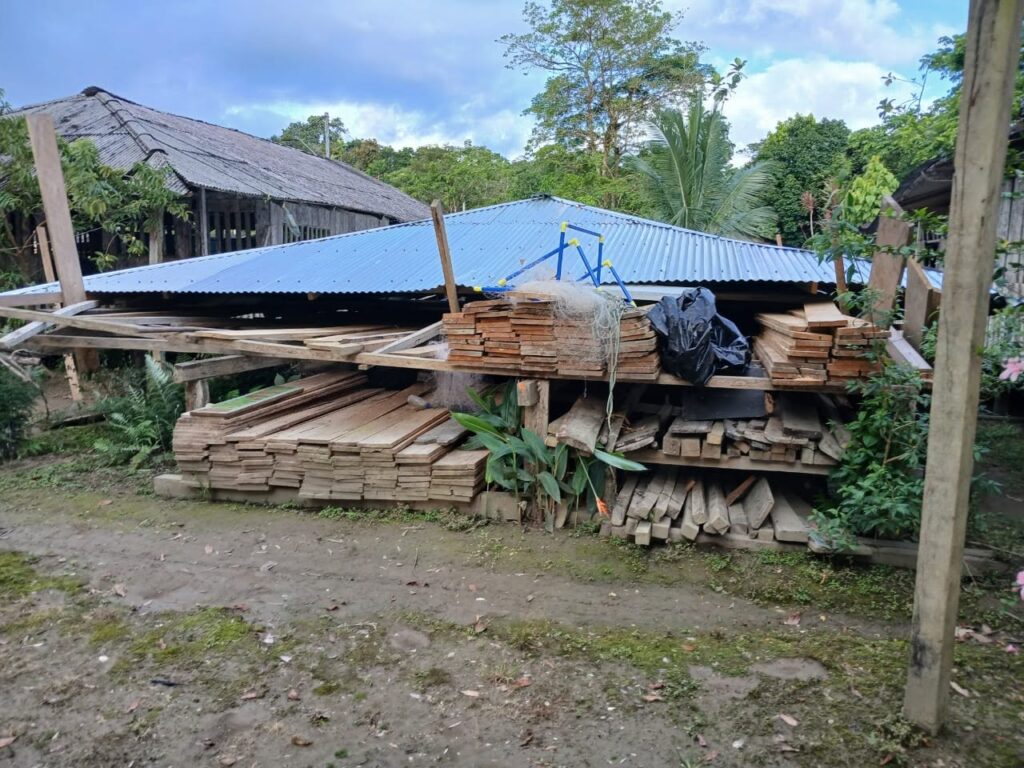
- Basic reconstruction materials: zinc roofing sheets and fasteners to support community-led repair of partially damaged homes. This phase does not cover full reconstruction of severely damaged buildings.
- Mobility support: fuel to allow Acadesan’s boats and vehicles to reach communities along the river, as almost all of these riverside communities are only accessible by water.
Together, this first phase of our emergency support will provide emergency food for more than a week to 500 people through the communal kitchen system, and will enable the repairing of an estimated 90 homes, with labour carried out by the communities themselves.
In regards to mobility support, Acadesan’s small boats will be used both to deliver these supplies and, where needed, as temporary storage before distribution, with community leaders helping to distribute items directly to families. This response is expected to run for approximately four months, and is anticipated to bring immediate relief to around 15 communities across the San Juan river basin, alongside detailed on-the-ground assessments of both short and medium-term needs. These efforts will be just the beginning of CCC’s work as we will continue the emergency relief with livelihood recovery, infrastructure rebuilding and support for education.
Given Chocó’s existing vulnerabilities, the impact of this disaster on children is likely to be severe and long-lasting. To ensure the mitigation of risks towards the children of Chocó, CCC is committed to working alongside Acadesan to respond to the needs on the ground and to support the region’s recovery in the months ahead.
How You Can Help
The scale of this disaster means that recovery in Chocó and the surrounding regions will take time, resources, and sustained support. Your donation to Children Change Colombia will go directly toward supporting our local partner’s relief efforts in Chocó, helping provide children and families with the assistance they need in the wake of this earthquake.
Donate to this link to help CCC support communities in Chocó as they begin to rebuild.
Written by: Diego Mojica | Communications and Projects Intern