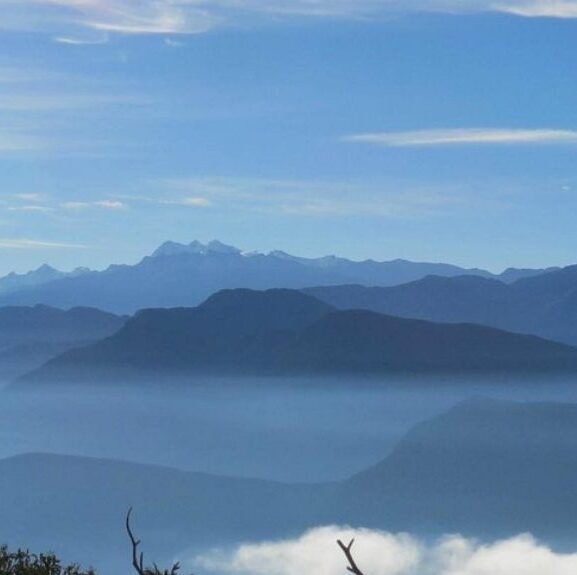
At a time when global conversations often focus on carbon footprints and policy shifts, a different perspective emerges in the mist-shrouded peaks of the Sierra Nevada de Santa Marta in Colombia, where the dialogue is deeper and rooted in indigenous culture.
Here, the land is not a “resource” to be managed, but a living entity. In this sacred territory, many Indigenous communities treat land, water, forests, and animals as an interconnected whole where the relationship with nature is built on reciprocity rather than extraction. For Children Change Colombia this understanding shapes our work in Minca, where environmental education, peacebuilding and children participation come together.
The Rights of Nature
Across Latin America, concepts such as Pachamama and buen vivir offer a different environmental ethic to the Western worldview. In the Indigenous worldview, Pachamama (Mother Nature) is not merely a symbolic figure, she is a foundational life source that encompasses fertility and looks after her children. This relationship is built on a bond of harmony and mutual protection, where humans both protect the environment and in turn benefit from the life and abundance she provides. This is the essence of buen vivir, a way of living where the individual exists in balance with both their social and environmental surroundings. While these concepts are often associated with Andean cultures, the indigenous groups of the Sierra Nevada share the same foundational principles of harmony between humans and nature.
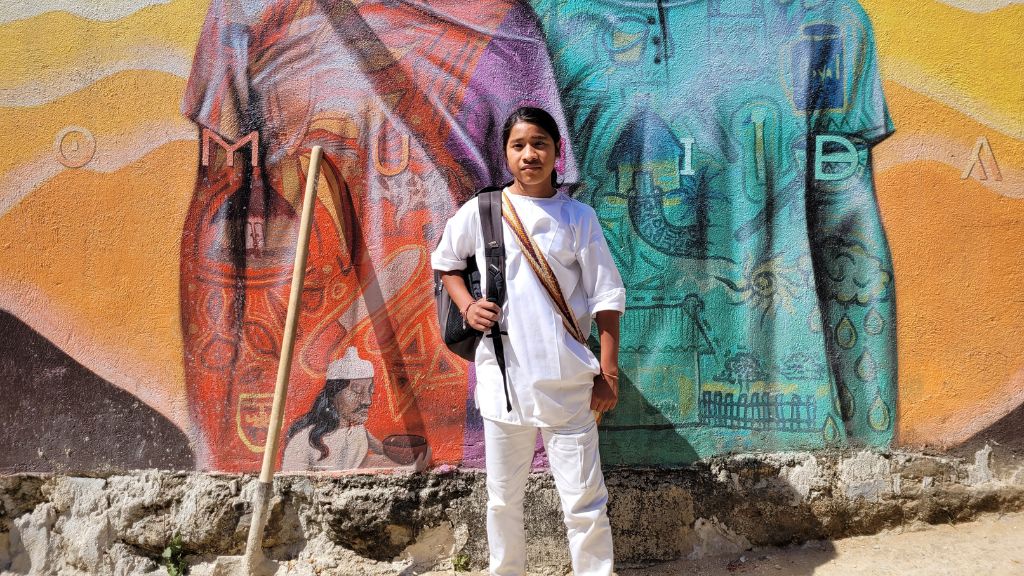
For the Elder Brothers of the Sierra Nevada – The Kogui, Arhuaco, Wiwa and Kankuamo – their ancestral territory is not merely a geographic location but a living entity known as ‘the Heart of the World’. These communities believe they bear a unique mandate to maintain universal equilibrium, ensuring that the spiritual and physical worlds remain in balance. In this paradigm, the health of the ‘Heart’ depends on the harmony of all elements: land, sea, water, wind, fire, stones, minerals, plants, and animals. To sustain this balance, spiritual leaders known as Mamos perform rituals and pagamentos (offerings) to communicate with the spiritual world and resolve energetic conflicts. This perspective closely aligns with the growing global recognition of the Rights of Nature: the idea that rivers, forests and ecosystems have an inherent right to exist, regenerate and be protected. In Colombia, this legal evolution is already taking root. The Supreme Court has declared the Colombian Amazon a subject of rights, entitling it to protection, conservation, and restoration. Furthermore, eight major rivers, including the Atrato and Magdalena, have been recognised as subjects of rights mandating government action to restore their ecological health.
For Indigenous people of the Sierra Nevada, environmental damage is not only ecological loss, it is also spiritual imbalance. When there is a discord between the land and the people it manifests as illness and chaos requiring rituals to re-harmonise the territory. Without these rights, indigenous territories remain vulnerable to extractive practices that prioritise short-term profit over ecological balance, undermining both the environment and the cultural systems that have protected it for generations. The leaders of the indigenous groups fight every day to defend these territories, working to preserve their sacred land and restore ecological balance to the Sierra Nevada.
A Global Responsibility
The concept of the Heart of the World carries a profound sense of interconnectedness. The Elder Brothers believe that the Sierra Nevada functions as a regulator for the entire Earth. Indigenous leaders warn that the current extractive economic model and various megaprojects are destabilising their spiritual and material order, pushing the world toward a breaking point. These megaprojects consist of large-scale infrastructure, energy, mining and port developments such as the Port of Brisa in Dibulla and the Ranchería Dam in La Guajira. Although many of these projects are not physically constructed within the Sierra Nevada itself, Indigenous communities argue that they still directly affect the region because the Sierra functions as an interconnected ecological and spiritual system. The diversion of rivers, industrial expansion, mining corridors and environmental degradation in surrounding territories can alter water flows, fragment ecosystems, threaten biodiversity and disturb the sacred balance between nature and human life that sustains the mountain. Even proposed infrastructure projects such as the Santa Marta Paraguachón highway or the construction of a cable car to Ciudad Perdida have been circulated by Indigenous communities as violations of their territorial autonomy and spiritual order. This broader tension between economic expansion and environmental protection is increasingly visible on a local cable in Minca, where the rapid growth of tourism risk is reposing the same extractive logic that prioritises short-term commercial gain over ecological balance and long-term sustainability. Therefore, the promotion of responsible ecotourism becomes essential not only for preserving biodiversity, but also for protecting the cultural and spiritual integrity of the Sierra Nevada.
Ecotourism in Minca
Minca is currently at the centre of a blossoming tourism industry. While this brings vital income, the rapid expansion of tourism without adequate planning threatens the region’s delicate ecosystems. According to the OECD’s latest environmental review, tourism significantly intensifies existing waste pressures on Colombia’s Caribbean coast, where 65% of solid waste generated in coastal municipalities eventually reaches the sea. This rapid growth has contributed to severe environmental stressors, including the mismanagement of wastewater and increasing pressure on local water systems. These cumulative pressures threaten the Ciénaga Grande de Santa Marta, a UNESCO Biosphere Reserve that biologists warn is approaching ecological collapse. Recent local data suggests that pollution has devastated the traditional fishing industry: where catches once reached 60,000 tonnes, they have now fallen to barely 5,000, leaving communities feeling “forgotten and washed out”(Wallace, 2025). Furthermore, the plastic crisis has intensified in recent years, with plastics now accounting for 86% of marine debris on priority beaches along the coast. Scientists have also detected harmful bacteria attached to microplastics within the Ciénaga Grande, posing increasing risks to both the ecosystem and public health.
True ecotourism should not simply mean visiting beautiful places. It should mean learning how to enter a territory with humility; understanding local knowledge, respecting limits and recognising that sacred spaces are not commodities for consumption. Across parts of the Sierra Nevada, community-led initiatives already attempt to promote this model through Indigenous-guided hikes, environmental education, and cultural exchanges with Kogui and Wiwa communities, where visitors are encouraged to learn about ancestral relationships with the land rather than simply consume it as a tourist attraction. Environmental protection in the Sierra Nevada also means respecting the voices of the Kogui, Arhuaco and Wiwa communities who have cared for this territory for generations. Sustainable tourism cannot exist without listening to local Indigenous communities and respecting how cultural and sacred spaces are shared, moving past the consumer culture. This is particularly important in areas surrounding Ciudad Perdida and Tayrona, where Indigenous authorities have repeatedly argued that unrestricted tourism risks disrupting spiritual practices and the ecological balance of sacred territories. In order to respect Mother Nature, we must go beyond the legal obligations of the Rights of Nature and look toward the Indigenous spiritual connection to Pachamama. Recognising that the Sierra Nevada is not just a destination but a living entity where the land is synonymous with the soul. Recognising this is a step forward in building a more respectful relationship with nature and towards ensuring that this unique ecosystem is passed on intact to future generations.
Our Mission in Minca
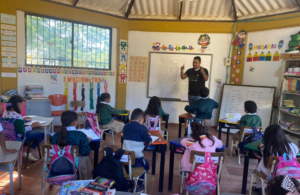
To recognise the Rights of Nature means acknowledging that the land is not a collection of resources for extraction, but a living entity with an inherent right to exist, persist, and regenerate. In collaboration with Misión Gaia, our mission provides a holistic approach to education that nurtures emotional, social and environmental awareness of the next generation. In 2025 alone this work reached 504 students, 28 teachers, and 54 parents, transforming local schools into hubs for territorial defense and community development.
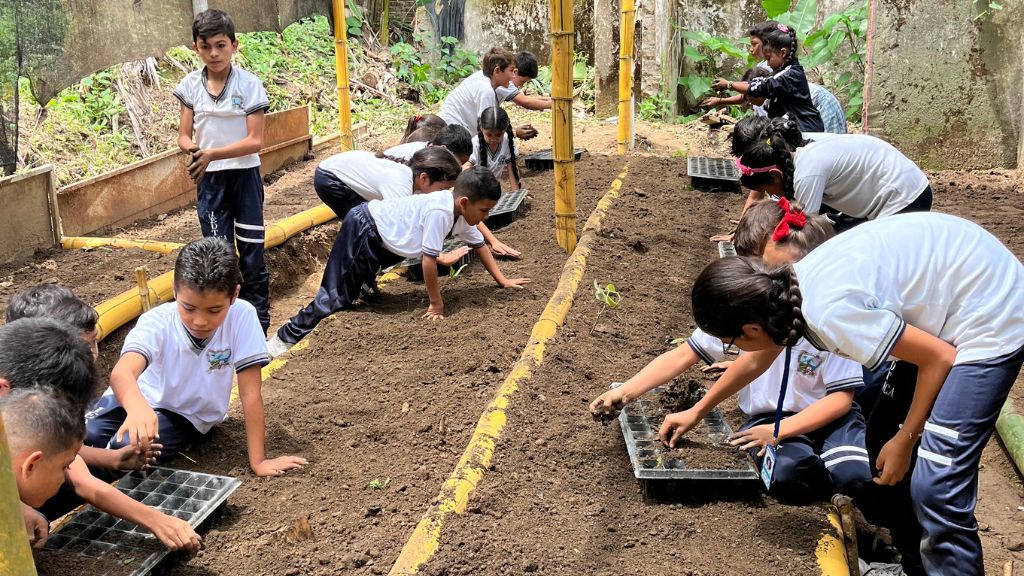
A cornerstone of this work is the Taguaventura tourism club. This project takes place in collaboration with the local school in La Tagua and its purpose is to foster the indigenous ethics of “buen vivir” where children learn to live in perfect balance with their social and environmental surroundings. In this club, students participate in birdwatching workshops and biodiversity field trips, where they use digital tools to document their findings and have even created their own local bird guide. This initiative allows children to enrich their connection to the land through writing and illustration, fostering a good relationship with nature. Beyond the trails, students practice stewardship daily by managing eight active school gardens and advanced composting systems, which currently supply fresh produce directly to school kitchens. These hands-on activities such as plating and nurturing seedbeds instill a sense of ownership and responsibility, teaching children that the earth must be repopulated rather than merely depleted. Ultimately, these gardens provide a practical benefit to the community, demonstrating that caring for Pachamama leads to tangible abundance.
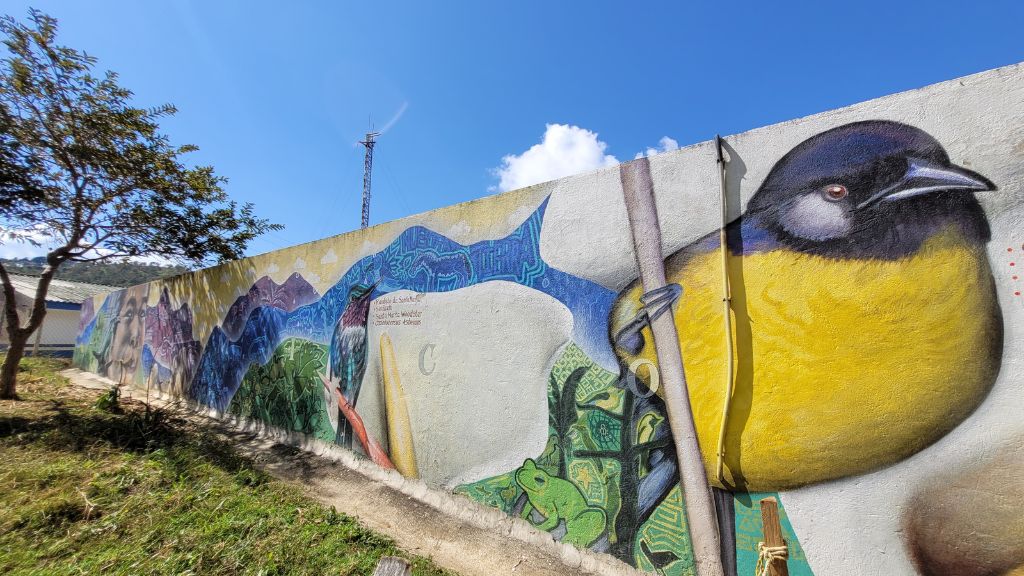
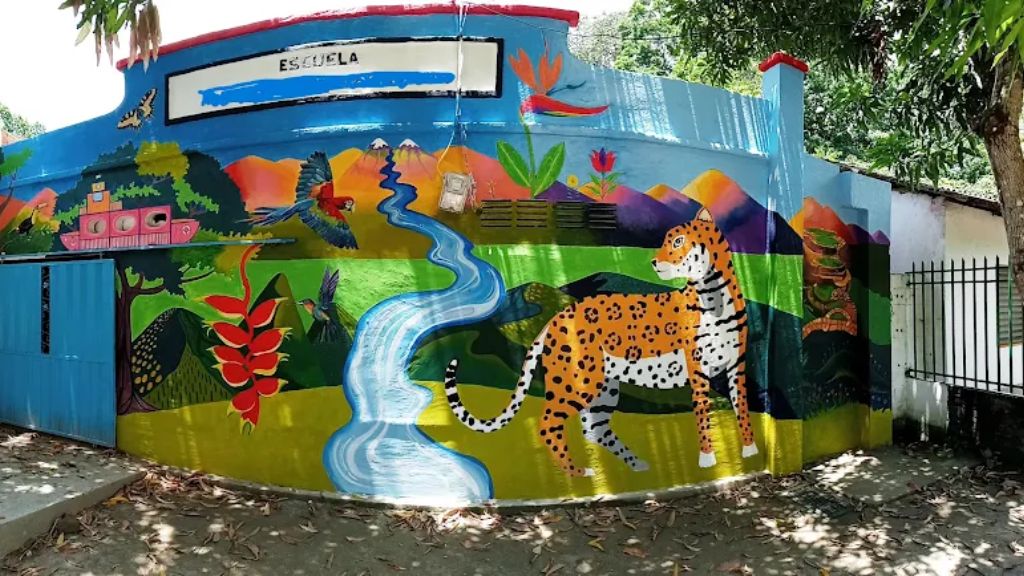
Creative expression is further integrated through artistic workshops where children engage in painting and drawing. These activities act as a form of visual expression, giving children a platform to become the creators and strategists of their own identity and relationship with nature. The vibrant murals created by the children in Minca are profound acts of territorial autonomy. By painting their own stories and landscapes, children make their connection to the territory visible to the public, resisting narratives that reduce the region to a mere tourist backdrop. These murals serve as a visual manifesto against cultural erasure, asserting that the Sierra Nevada is not a commodity for consumption but a living entity where the land is synonymous with the soul.
Restoring the World’s Equilibrium
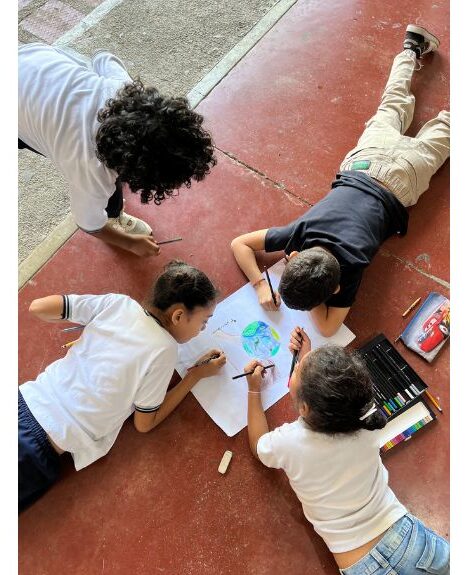
The reverence for the Heart of the World offers a powerful blueprint for a world currently facing mass extinction and the climate crisis. The Sierra Nevada reminds us that caring for the planet begins with relationships rooted in respect, reciprocity and responsibility. Protecting children’s futures is inseparable from protecting the ecosystems they inherit, ensuring not only their survival but their ability to thrive. A safe and sustainable future depends on the active conservation and restoration of the natural world.
We invite you to look at the Sierra Nevada through the eyes of the children of Minca. They aren’t just waiting for a better future; they are painting it, planting it, and protecting it every day.
Stand with Children Change Colombia to ensure the Sierra Nevada is inherited unpolluted by the generations to come.
Written by: Laura Kadłuczka | CCC PR and Outreach Intern
References
Etchart, L. (2019). Indigenous peoples and the rights of nature. In T. Gatehouse (Ed.), Voices of Latin America: Social Movements and the New Activism (pp. 87-119). NYU Press; Monthly Review Press.
Johnston, A. (2000). Indigenous Peoples and Ecotourism: Bringing Indigenous Knowledge and Rights into the Sustainability Equation. Tourism Recreation Research, 25(2), 89-96
OECD. (2026). OECD Environmental Performance Reviews: Colombia 2026. OECD Publishing.
Ulloa, A. (2011). The Politics of Autonomy of Indigenous Peoples of the Sierra Nevada de Santa Marta, Colombia: A Process of Relational Indigenous Autonomy. Latin American and Caribbean Ethnic Studies, 6(1), 79-107
Wallace, E. (2025, April 17). ‘No fish, no money, no food’: Colombia’s stilt people fight to save their wetlands. The Guardian
Valderrama González, M. I. (2019, November 29). “We are spiritual and material Guardians of the Heart of the Earth and we will continue fulfilling our mission to save Humanity”. News Archive